
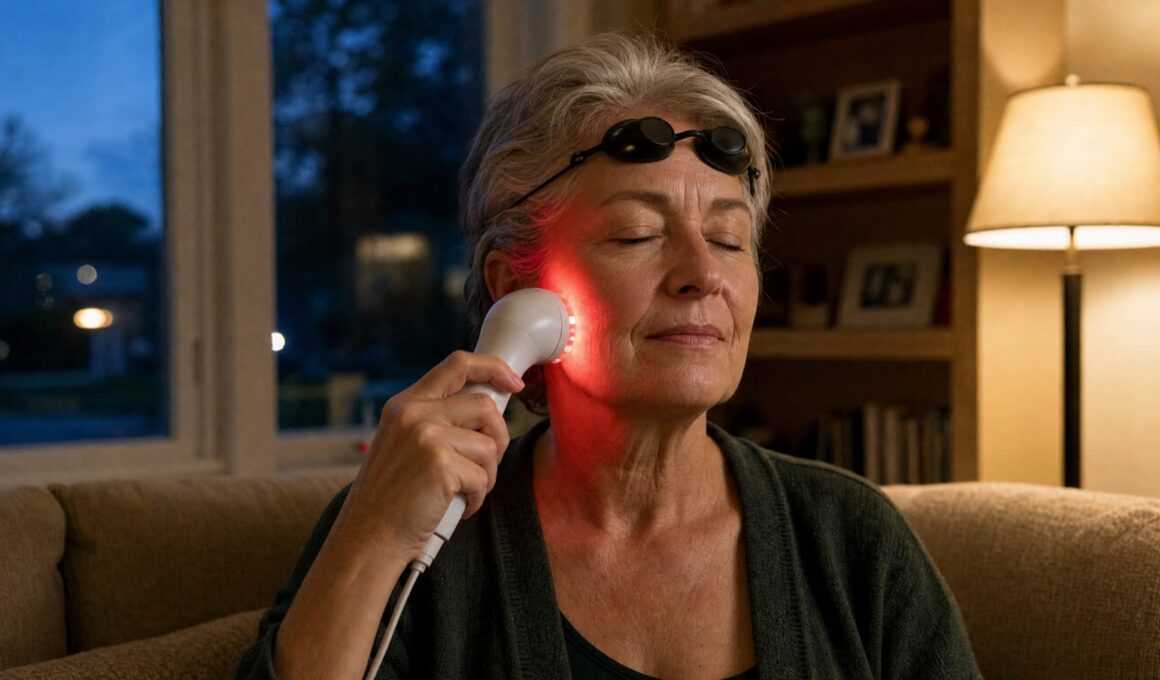
Short answer: red and near-infrared light at 630 to 850 nanometers has decent evidence for wound healing and modest, real evidence for fine lines and skin texture after eight to twelve weeks. It has no good evidence for fat loss and weak evidence for hair regrowth. Before buying, check wavelength, irradiance, distance, FDA clearance, eye protection and the return policy.
Red light therapy has moved from dermatology offices to Amazon in about five years, and the price range now runs from $30 handhelds to $2,000 full-body panels making the same promises. This guide separates what the research actually supports from what it does not, explains the six specifications that decide whether a device can deliver the dose used in the studies, and ends with a scoring checklist you can run on any product page.
🔴 Red light therapy in one box
- What it is: low-level light at red (630–660 nm) and near-infrared (810–850 nm) wavelengths, absorbed by cells and thought to nudge mitochondrial energy production. The technical term is photobiomodulation.
- Supported: wound and ulcer healing, some improvement in fine lines and skin roughness, short-term relief of certain kinds of joint and muscle pain.
- Not supported: fat loss, cellulite, “detox,” anything described as reversing aging.
- Dose matters: too little does nothing, too much does less. The device has to state the numbers.
- Timeline: weeks, not days. Photograph day one.
What does the research actually support?
The strongest data are the oldest. Red and near-infrared light has been studied for wound healing since the 1990s, and there is a reasonable body of controlled trials showing faster closure of chronic ulcers and surgical wounds. In the lab, fibroblasts exposed to these wavelengths produce more collagen and multiply faster, which is the mechanism most cosmetic claims lean on.
For the face, the evidence is smaller and more modest. The best-known trial, published in 2014, randomized 136 volunteers to red and near-infrared treatments twice a week for 30 sessions or to no treatment; the treated group showed improved skin complexion and feeling, and measurable reductions in roughness and fine lines on skin profilometry. Several smaller studies since, mostly using LED masks at 633 and 830 nm, point the same direction. The honest summary: a visible but subtle improvement in texture and fine lines after two to three months, in people who use it consistently, with the effect fading when they stop.
✅ Decent evidence
- Wound and ulcer healing
- Fine lines, skin roughness (small trials, 8–12 weeks)
- Short-term pain relief in osteoarthritis and tendinopathy
- Oral mucositis during chemotherapy (clinical devices)
❓ Weak or mixed
- Hair regrowth in androgenetic alopecia (some FDA-cleared caps; effect small)
- Acne (blue light has more data)
- Wound scars, stretch marks
- Sleep, mood, “recovery”
❌ Not supported
- Fat loss and body contouring
- Cellulite
- “Boosting immunity” or “detox”
- Reversing wrinkles, lifting, or anything a procedure does
One area where the research and the marketing collide is the under-eye. Devices are sold for dark circles and bags, but the trials above measured texture and fine lines on cheeks and crow’s feet, not puffiness or pigment, and no light wavelength moves a fat pad. If that is your actual problem, our comparison of five methods for dark circles and under-eye bags lays out what does and does not work there, devices included.
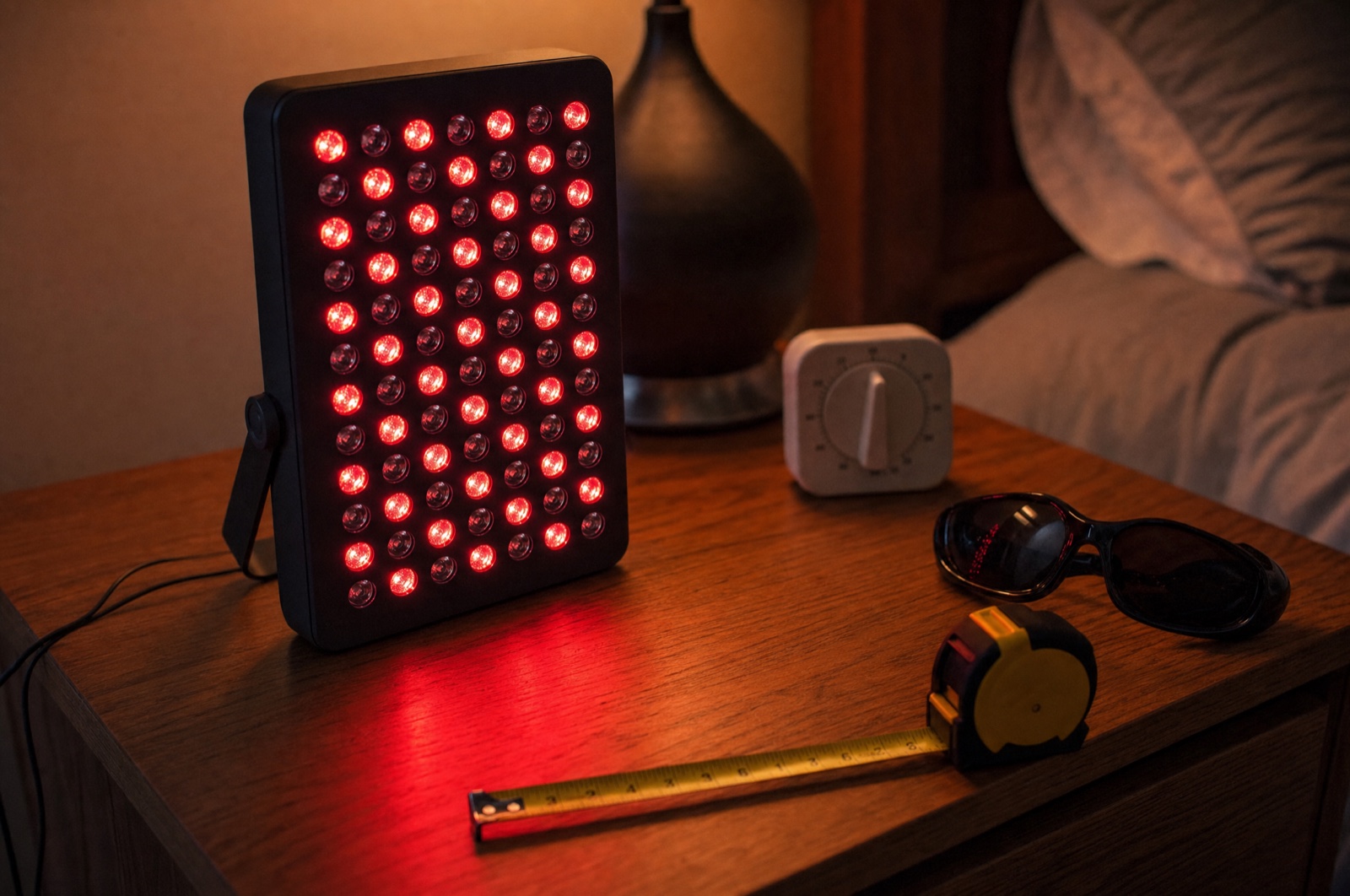
What should you check before buying a red light device?
How much does red light therapy at home cost?
The range is wide and the relationship between price and specification is loose. Four devices that document the six criteria above, from budget to full-price; approximate US prices as of September 2026.
Two observations from reading dozens of listings: the $30 to $60 handhelds on marketplaces rarely state irradiance at any distance, and at the top of the market you are paying for FDA clearance and clinical documentation more than for stronger light. A mid-priced panel with published numbers is the rational middle for most people.
Is red light therapy safe for home use?
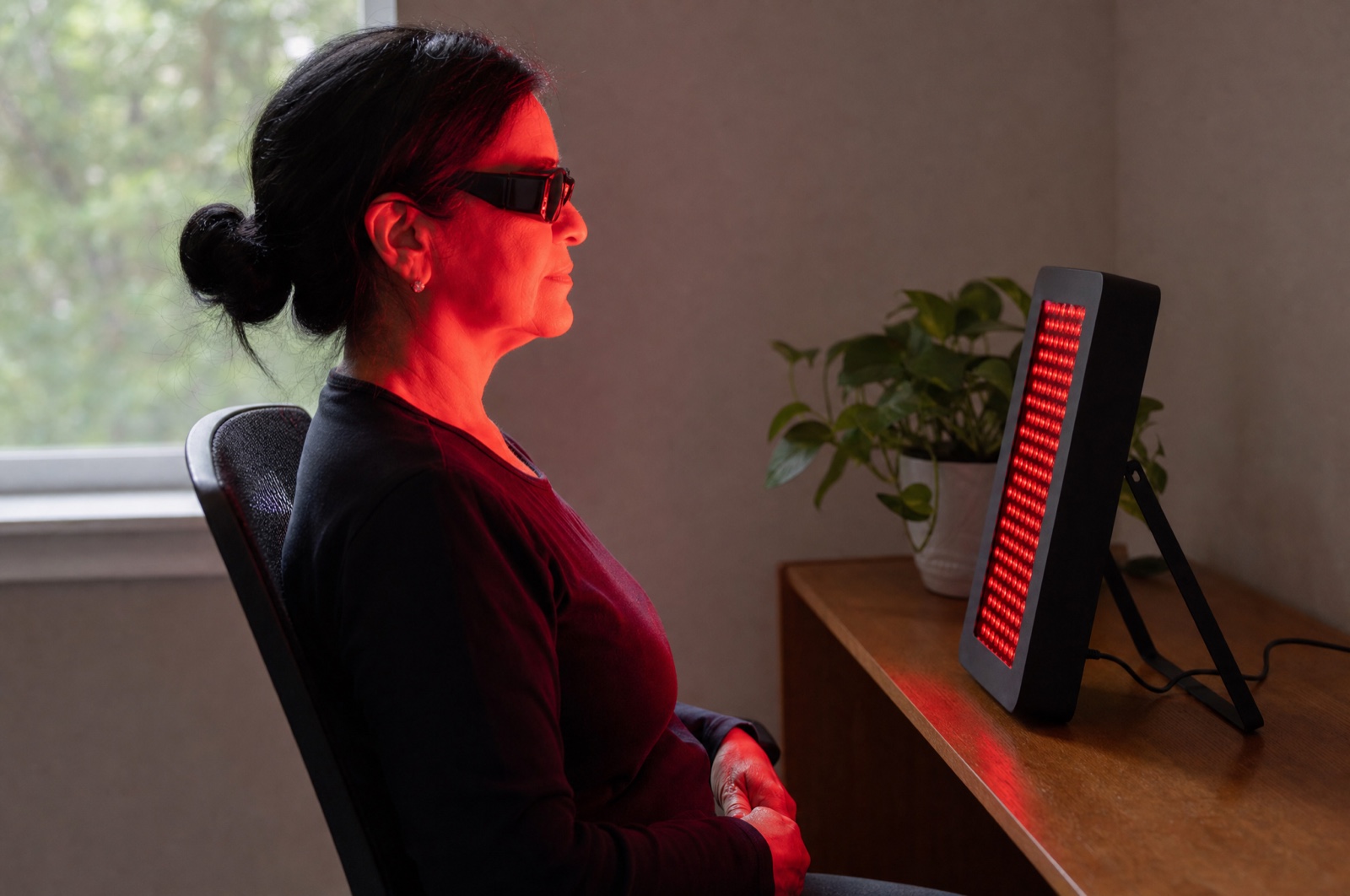
For the skin, at the doses home devices deliver, yes: trials report temporary redness or a feeling of warmth and little else. The device does not emit ultraviolet light and does not tan or burn. Three cautions are real. Protect the eyes, especially from near-infrared. Check your medications: isotretinoin, doxycycline and some other drugs make skin light-sensitive, and a pharmacist can tell you in a minute. And do not treat over a suspicious mole, an active skin cancer or an area being treated with photodynamic therapy without asking a dermatologist first. Pregnancy is not a documented contraindication for facial use, but the trials excluded pregnant women, so there is no safety data either way.
Score the device in your cart
Six criteria from the product page and the manual. Check what is actually stated, not what the reviews assume.
🔴 Red Light Device Buyer’s Checklist
Check what the product page or manual actually states for the device in your cart. Six criteria, one score. Nothing leaves your browser.
⚠️ Four claims that should end the conversation
- “FDA-approved.” The FDA clears light devices; it does not approve them. A seller who uses the wrong word has either not read their own paperwork or has none.
- “Clinically proven” without a wavelength. The studies are wavelength-specific. A device that will not say which one it emits cannot borrow their results.
- Fat loss, cellulite, detox. No controlled trial supports any of these for home devices.
- Results in days. Collagen remodeling takes weeks. Any before-and-after photo dated inside a fortnight is lighting, not light therapy.
Frequently asked questions
Does red light therapy actually work for wrinkles?
How often should you use a red light device at home?
Is red light therapy safe? Are there side effects?
What is the difference between FDA-cleared and FDA-registered?
Sources
📚 Sources
- Wunsch A, Matuschka K. A controlled trial to determine the efficacy of red and near-infrared light treatment in patient satisfaction, reduction of fine lines, wrinkles, skin roughness, and intradermal collagen density increase. Photomed Laser Surg. 2014: https://pubmed.ncbi.nlm.nih.gov/24286286/
- Avci P et al. Low-level laser (light) therapy (LLLT) in skin: stimulating, healing, restoring. Semin Cutan Med Surg. 2013: https://pubmed.ncbi.nlm.nih.gov/24049929/
- Hamblin MR. Mechanisms and applications of the anti-inflammatory effects of photobiomodulation. AIMS Biophys. 2017: https://pubmed.ncbi.nlm.nih.gov/28748217/
- FDA, 510(k) Premarket Notification database: https://www.accessdata.fda.gov/scripts/cdrh/cfdocs/cfpmn/pmn.cfm
- FDA, Device Registration and Listing: https://www.fda.gov/medical-devices/how-study-and-market-your-device/device-registration-and-listing
- Cleveland Clinic, Red Light Therapy: Benefits and Uses: https://my.clevelandclinic.org/health/articles/22114-red-light-therapy
- American Academy of Dermatology, At-home devices: what dermatologists want you to know: https://www.aad.org/public/cosmetic/safety/at-home-devices