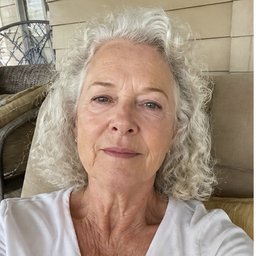
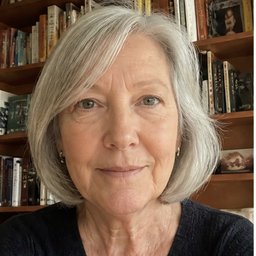
I’m 62 and Strangers Think I’m 42. My Secret is NOT Botox. It’s this $59 Korean Cream!
I was a nurse for 35 years. I spent 19 of them working for a dermatologist, quietly telling women to save their money. Then a woman from my Tuesday Bible study came back from six weeks in Seoul looking fifteen years younger — and handed me a plain little jar.
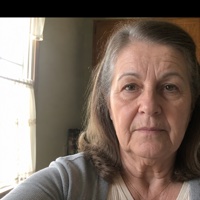
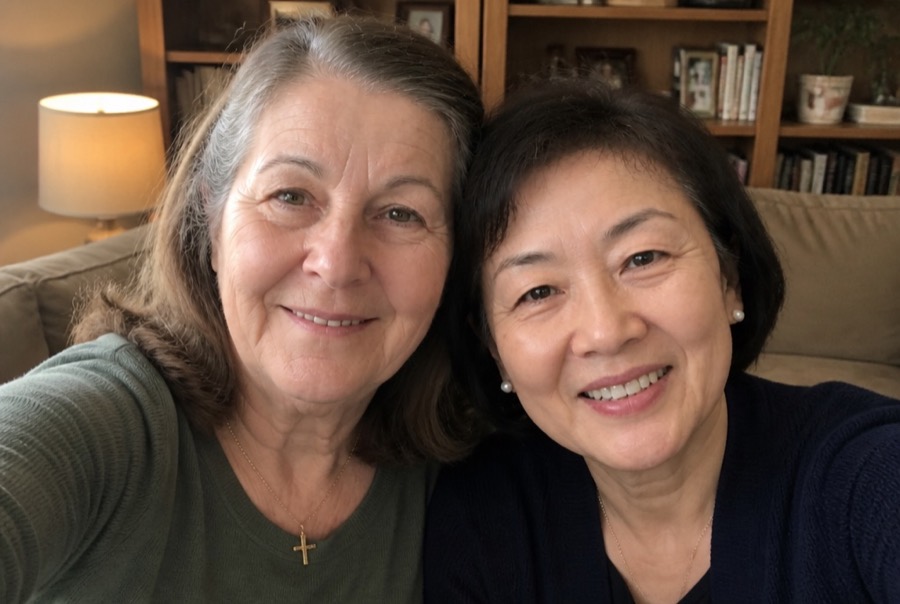
At 62, I had made peace with my age. Or that’s what I told myself.
Peace, for me, looked like this. I gave away everything in my closet that didn’t have a collar. I stopped looking at the lines around my mouth in the mirror, which is a skill you can actually learn. At Bible study I took the chair at the end of the table, the one where the window light doesn’t reach. And when somebody pulled out a phone for a group photo, I was already on my feet. „I’ll take it.“
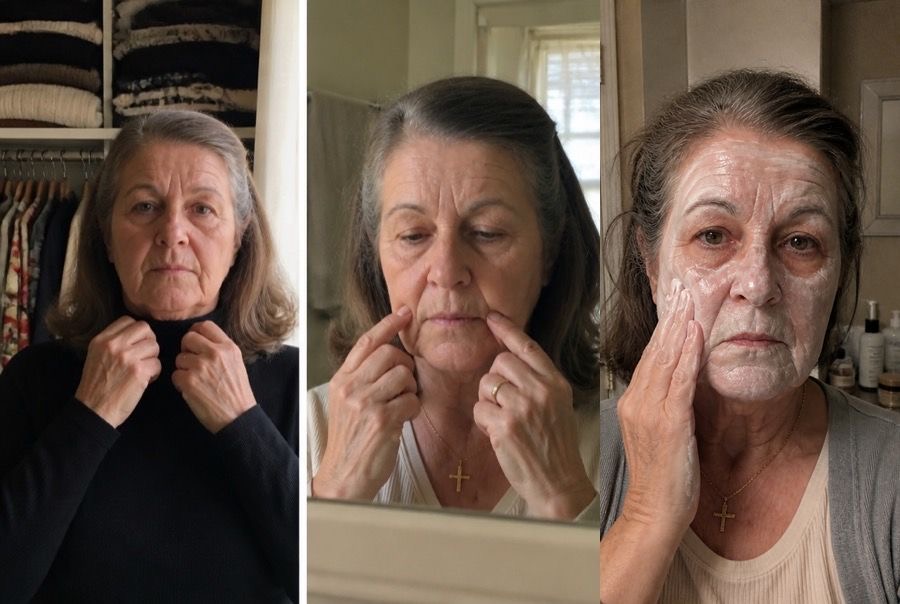
It took me three years to admit what that actually was. It wasn’t peace. It was surrender. And I’d gotten very, very good at it.
The worst part is that I knew better than anyone.
For 35 Years, I Was the One Telling Women to Save Their Money
I was a nurse for 35 years. The last 19 of them, I worked for a dermatologist here in town. So I’ve seen behind the curtain.
I watched women hand over $300 a month for creams I knew cost a few dollars to make. I sat in the lunch meetings where the reps taught us which words move a jar off a shelf. I held hands in the injection room. Then I watched those same faces come back three months later, because the lines came back anyway.
And I’ll tell you the thing nobody at that front desk ever said out loud.
The lasers faded sun spots. The fillers plumped things up for a season. The creams moisturized, and that was the whole of it. But the deep lines? The folds around the mouth. The crease between the brows. The neck. Nothing touched them. And every doctor I ever worked for knew it.
So I became the nurse who quietly told women to keep their money. They trusted me, because I wasn’t selling anything.
Then I turned 60. And I became the exact woman I used to talk out of her purchase.
The $150 serum in the pretty glass bottle — bought it. The retinol that left my cheeks red and stinging for nine days — tried it. I even sat in a consultation chair while a lovely young woman with perfect skin walked me through injections, and I nodded along knowing everything I know, and I still almost booked it. Me. The nurse. That’s how far gone I was.
Then Came the Morning That Finished Me
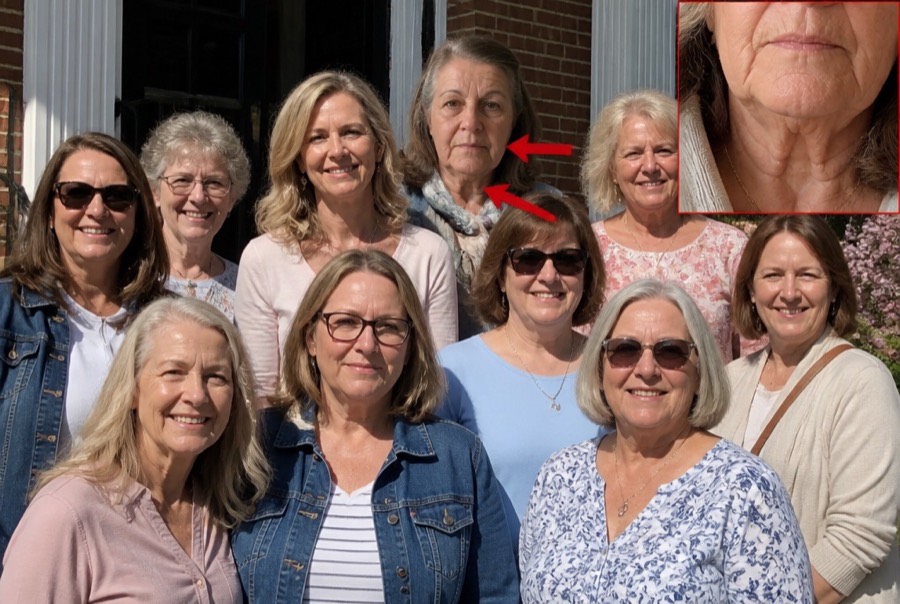
Our church holds a women’s retreat every spring. Group photo on the front steps at the end, everybody lined up with the morning sun straight in our faces.
I did what I always do. Back row. Half behind Peggy’s shoulder. Checked my scarf twice before I stepped in.
Somebody posted it on the church Facebook page that night and tagged all thirty of us.
I did not recognize the woman in that photo. She looked ten years older than I feel. The folds around her mouth made her look annoyed, and I remember being happy that morning. Her jaw had gone soft and gone sideways. And the scarf had slipped in the wind, so there was my neck — the one I’d been hiding for three years — in front of the whole congregation.
I sat in my car in the church parking lot and cried. Then I felt foolish for crying, which was somehow worse.
Because I’m a woman of faith. I know my worth isn’t in my face. I have said those exact words to younger women more times than I can count, and I meant every one of them. And I’d still catch myself in the hall mirror at home and feel that small drop in my chest, the one you don’t tell anybody about.
I prayed about it more than I will ever admit to you.
One Tuesday, the Answer Walked In Carrying a Coffee Cake
I’ve led our Tuesday morning Bible study for twelve years. Same table. Same terrible coffee. Mostly the same women for decades.
Mi-Ja Lee has sat three seats down from me for nine of those years. She’s 64 — two years older than me. She grew up in Seoul and came here in her thirties. This spring she flew back to help her older sister move out of an apartment. She was gone six weeks.
The Tuesday she came home, I lost my train of thought in the middle of a sentence.
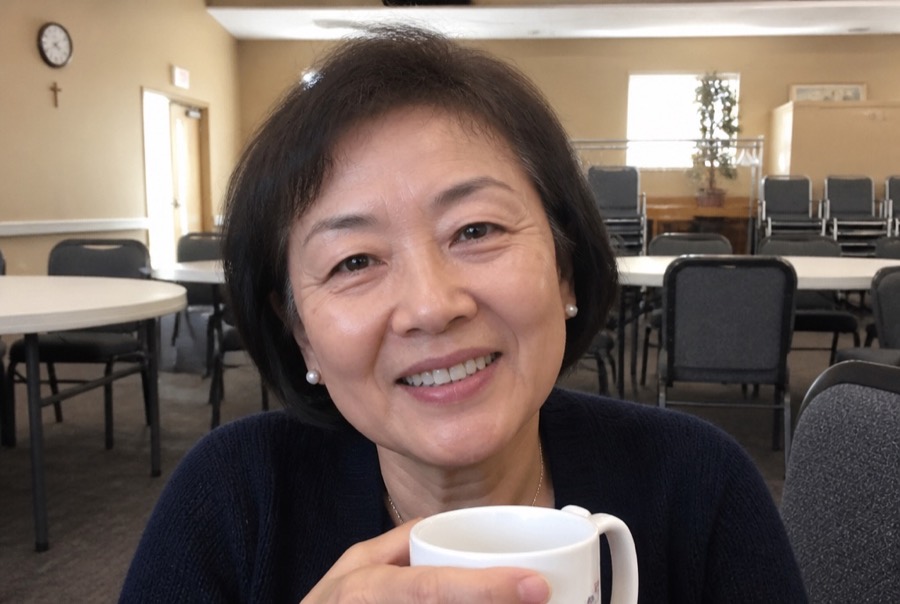
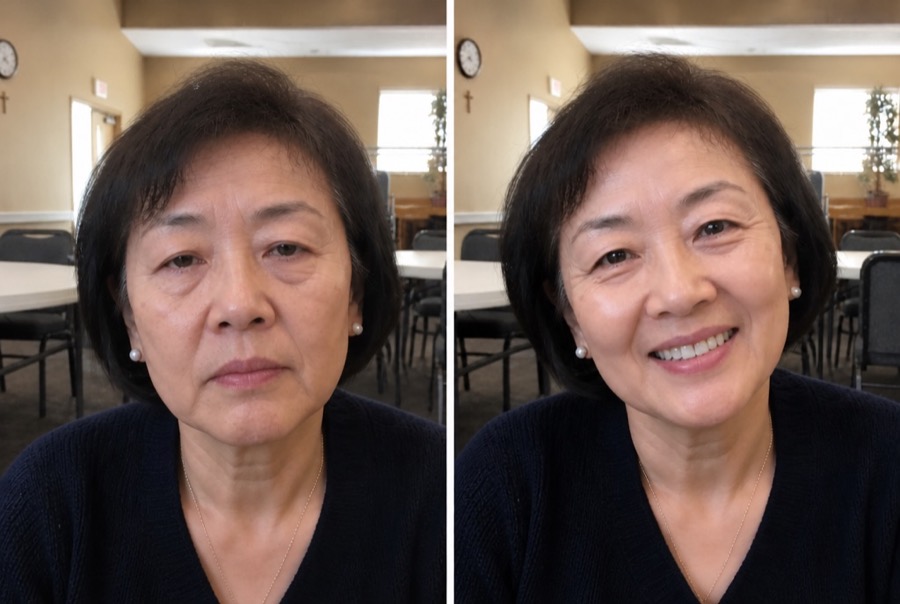
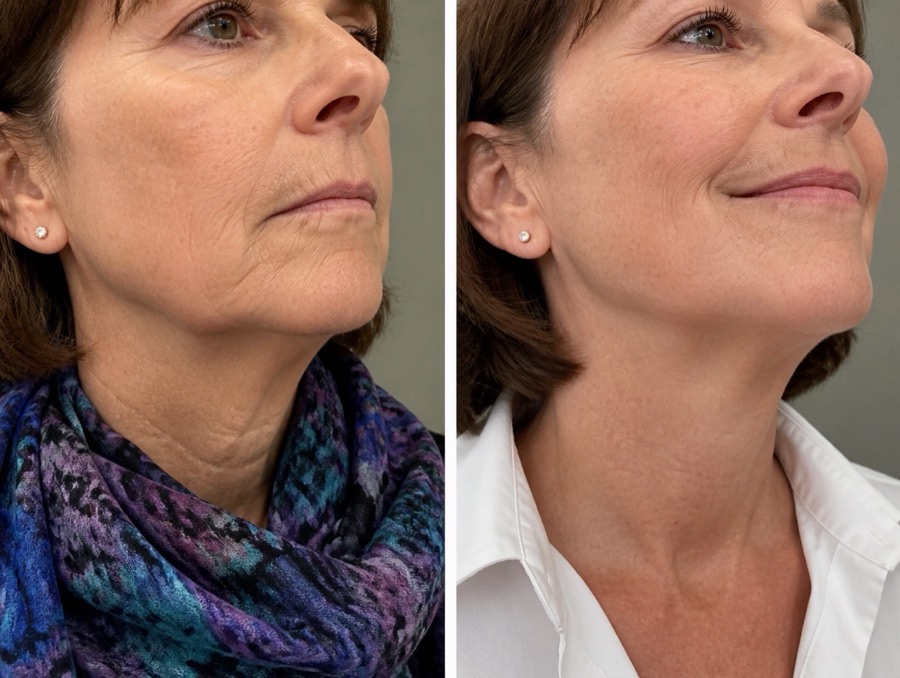
Her skin was lifted. Bright, in a way that had nothing to do with the overhead lights in that fellowship hall. The folds around her mouth had softened. Her jawline was back. She looked fifteen years younger than she had at Easter, and I had seen her at Easter.
It wasn’t makeup — she’s worn the same lipstick for a decade. It wasn’t the lighting. And it certainly wasn’t a filter, because she was standing four feet from me holding a coffee cake.
The other women said what church women say. „Mi-Ja, you look wonderful. So rested.“
Rested. I’m a nurse. I know exactly what rest can and cannot do to a face. That was not rest.
So after everyone cleared out, I stayed back to help her stack chairs. And I asked her straight.
She laughed like she’d been waiting six weeks for one of us to finally ask.
Then she said the sentence I have not stopped thinking about since. „Joyce, it isn’t what you put on the skin. It’s what you give the skin to work with. In Korea, everybody figured that out years ago.“
I asked her what on earth that meant.
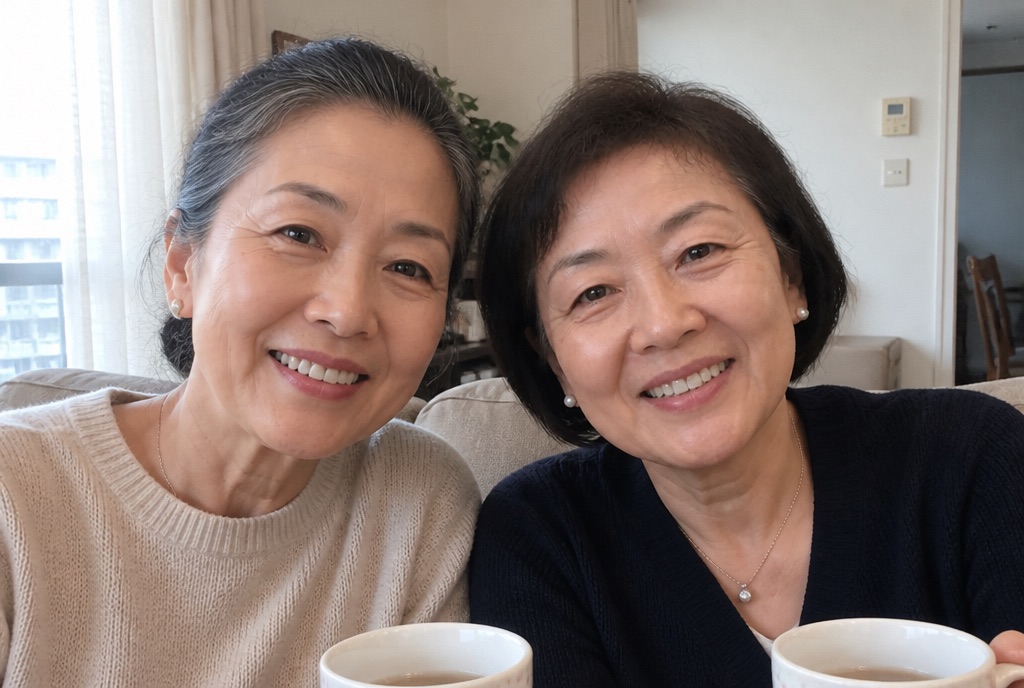
She told me about her sister. She’s 71. Strangers in Seoul guess she’s in her fifties, and Mi-Ja says that with the particular annoyance of a younger sister. Mi-Ja had asked her the exact question I’d just asked. Her sister opened Mi-Ja’s suitcase, looked at the American creams packed inside, and laughed at her. Out loud.
Then she handed Mi-Ja a plain little jar and said, „Use this one. Every woman my age here knows what’s in it.“
Mi-Ja used it every morning for six weeks.
Then she reached into her purse and set the jar on the table in front of me.
It Was Never Really About Collagen
Thirty-five years in medicine leaves a mark on you. When something works, I don’t want a testimony. I want to know why.
So that night I sat at my kitchen table with my reading glasses on and looked it up. Not the marketing. The actual published work. I was up past two in the morning.
And what I found made me angry.
Because the answer has been sitting in Korean dermatology for years, in plain sight, and the American skincare aisle has no interest whatsoever in you finding it.
Here is what I had been repeating to patients for three and a half decades. Every brand says it. Every magazine. Every woman behind every department store counter says it.
„Your wrinkles come from collagen loss. So put collagen back.“
It isn’t a lie exactly. It’s just not the part that matters. And once someone explains why, you can’t unsee it.
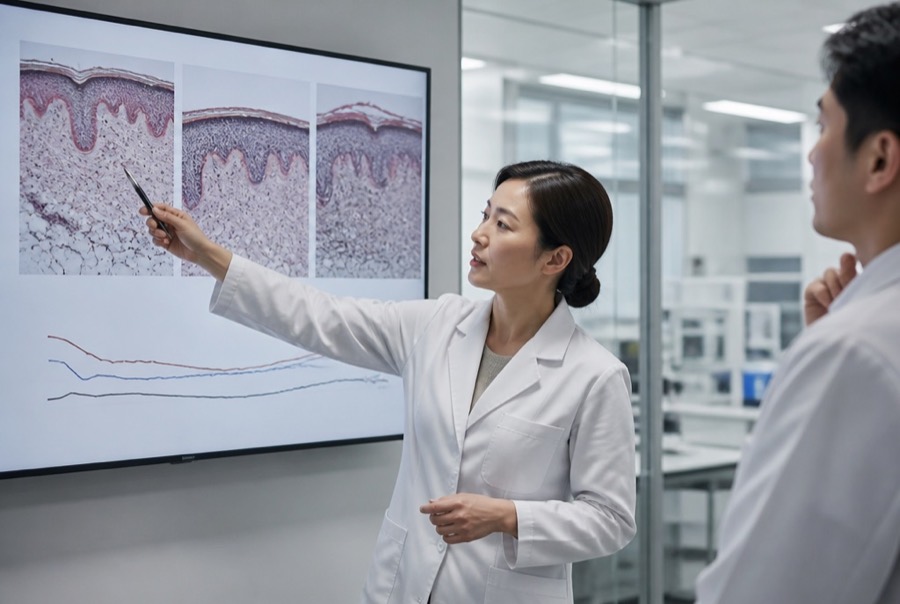
The cells that build your skin’s structure are called fibroblasts. In your twenties they work constantly — repairing, rebuilding, replacing. After 40, and sharply after 50, they don’t die. They go quiet. They sit there, perfectly capable, and stop being told to work[1].
So you can rub collagen on your face until the jar is empty. You are delivering bricks to a crew that has stopped showing up. That’s the whole story of my nineteen years at that clinic, and nobody ever put it to me that plainly.
What Was Actually in Mi-Ja’s Jar
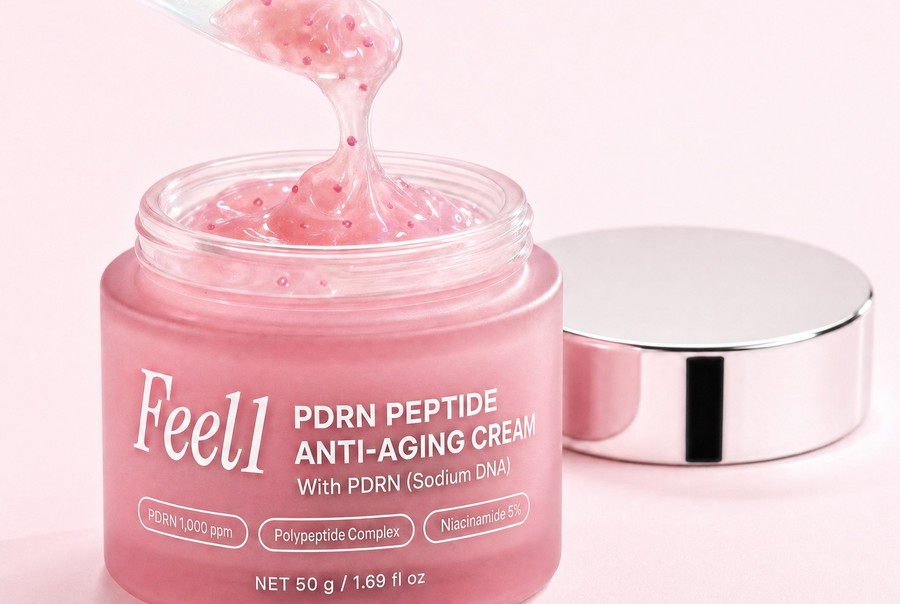
The ingredient on the back of that jar was one I had genuinely never heard of at the clinic. Four letters.
PDRN. Polydeoxyribonucleotide.
It’s a purified fragment of DNA, and it comes from salmon[2]. I know exactly how that sounds. I said it out loud in my kitchen and thought, well, here we go.
Then I read why it works, and I put my reading glasses down on the table.
Salmon DNA shares roughly 97% of its structure with human DNA. Not similar in spirit. Structurally, nucleotide for nucleotide, close enough that your skin doesn’t treat it as foreign — it treats it as material it recognizes and can immediately use.
And it does two things at once, which is the part that got me out of my chair:
That’s why Korean clinics have been injecting this for over a decade[3][4]. You may have heard the brand name for the injection — Rejuran. It runs $400 to $600 a session in Seoul, more here, and you need a series of them. Mi-Ja’s sister has had it. Half of Gangnam has had it.
And this is exactly why you’re suddenly hearing about salmon DNA everywhere at once.
Why PDRN Is Suddenly All Anyone Talks About
For ten years, PDRN was effectively locked behind a needle. That was the only way to get a molecule that size where it needed to go, and that meant a clinic, an appointment, and a bill.
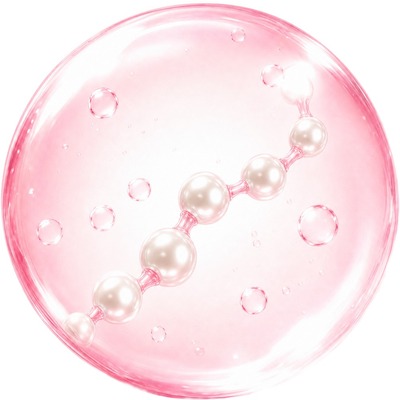
What changed is the delivery. Korean formulators worked out how to carry PDRN through the skin barrier in an encapsulated form[5][6] — those pink capsules you can see suspended in the cream — so it arrives intact instead of drying on the surface like every other jar in my bathroom drawer ever did.
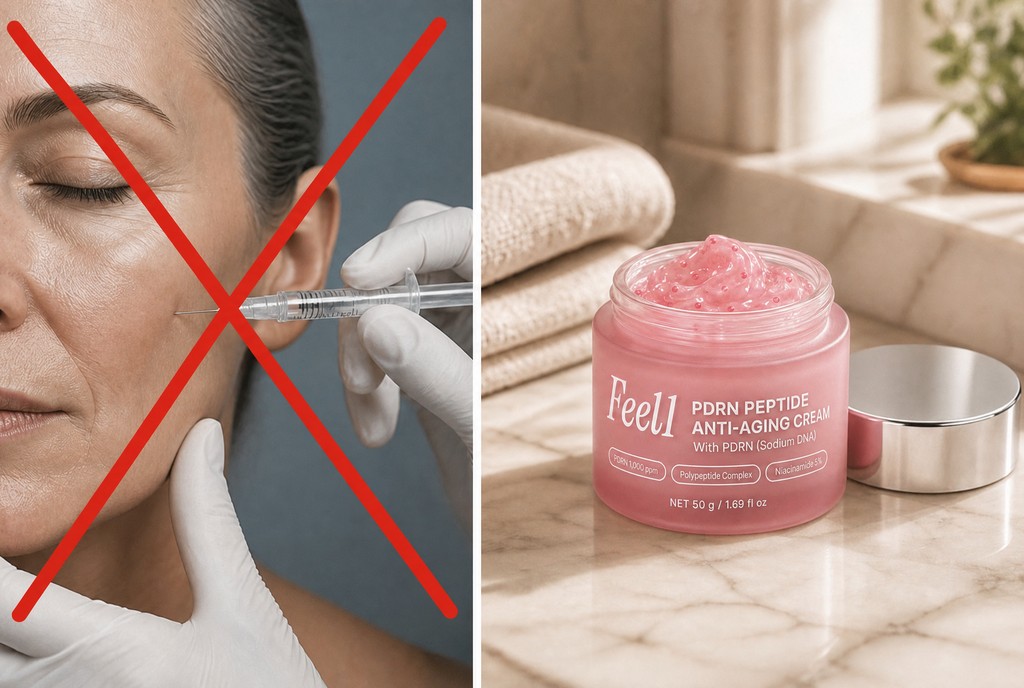
The moment that worked, it stopped being a procedure and started being a morning routine. In Korea that shift happened around three years ago. It’s only now crossing over here, which is why your daughter is suddenly sending you videos about salmon DNA and your dermatologist’s office has a waitlist.
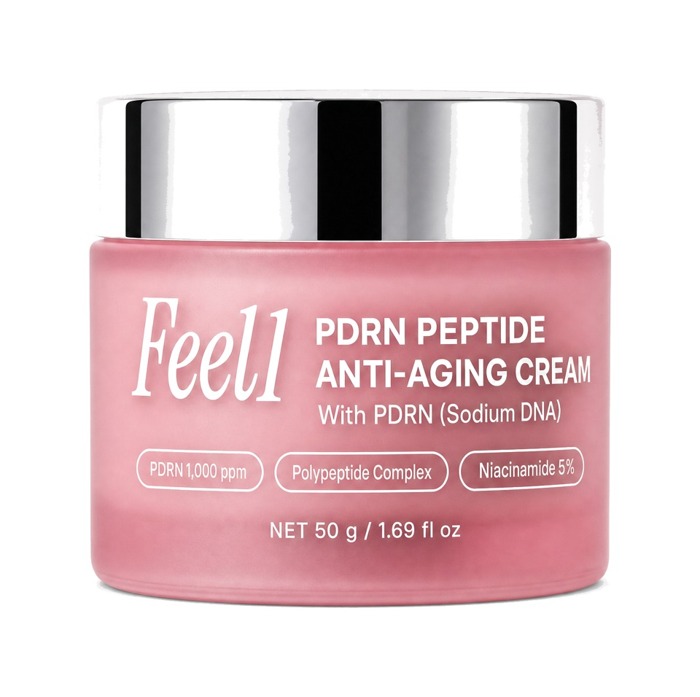
The company that brought Mi-Ja’s formula to the States calls it PDRN Peptide Anti-Aging Cream. One jar, one step. Wash your face, smooth it on, done. About seven seconds.
Being who I am, I still expected to be disappointed. Thirty-five years of watching promises fall apart will do that.
But it came with a money-back guarantee, and I had already wasted a great deal more than $59 on things that came with no promise at all.
So on a Thursday night, tired of surrendering, I ordered it. And I prayed about it a little sheepishly, because it felt like a silly thing to bring to God.
Why I Started Charting My Own Face Every Morning
The jar came that Saturday. I want to give you the honest version of what happened next — not the version that sounds like an advertisement.
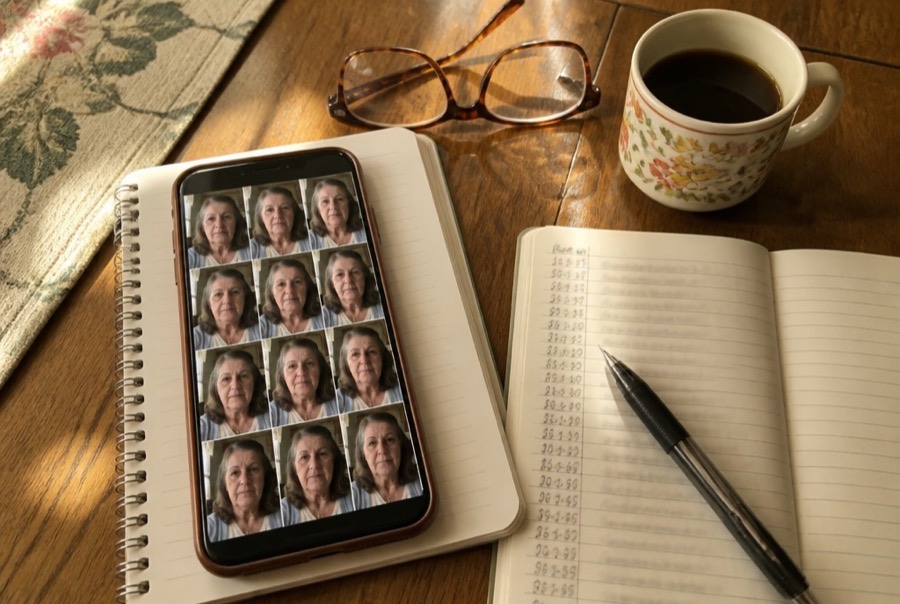
I did what any nurse does with something unproven. I charted it. One photo every morning, same mirror, same light, same time, before anything else. I still have every one of them on my phone.
Week one: almost nothing. And almost quitting.
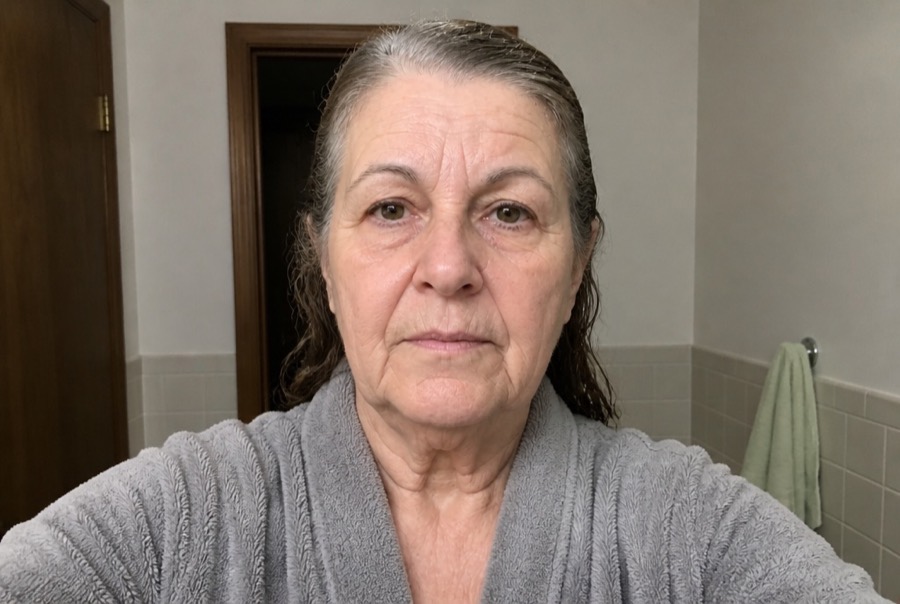
By day two my skin felt different under my fingers. Firmer. Softer at the jaw. Better hydrated than anything I’d used, and I have used a great deal.
But the mirror showed me the same face. And I watched it every morning the way you watch when you’ve been let down enough times to brace for it.
By day six I was writing the email in my head. The one to customer service that starts „I gave this a fair try.“
I never sent it. Because I told patients a hundred times that half a course of anything proves nothing. So I finished the course.
Day twelve: Dale noticed. And he had no idea he was supposed to.
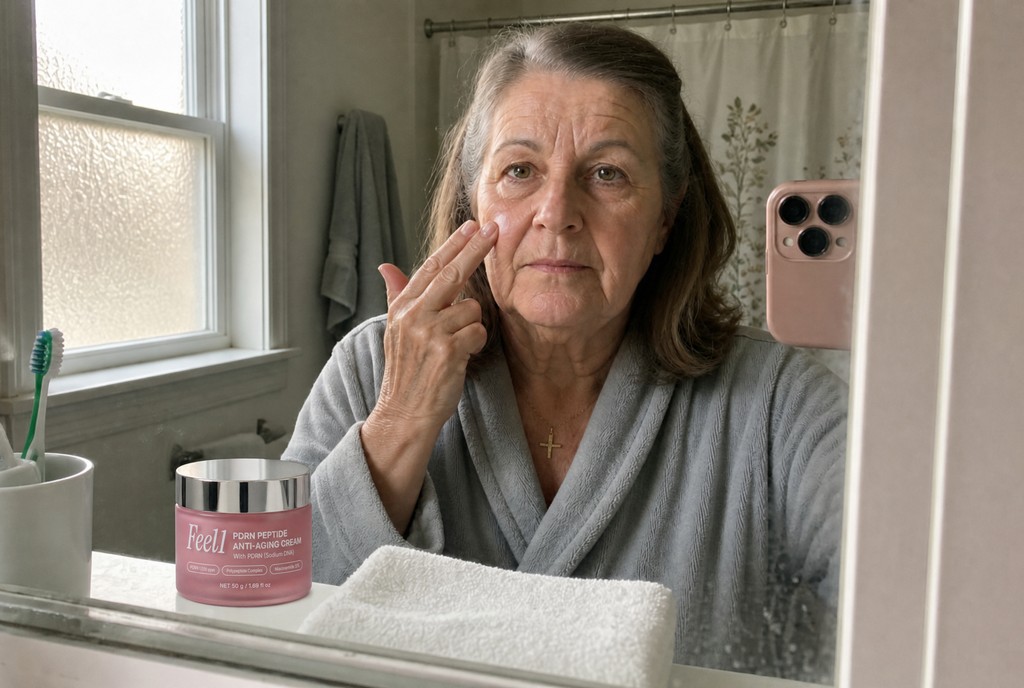
I hadn’t told him I was using anything. I wanted the kind of proof you don’t have to set up first.
He looked up from his coffee and said, „Your skin looks nice today.“
Dale has told me I look nice maybe a dozen times in forty years. Never once unprompted, and never on a Tuesday.
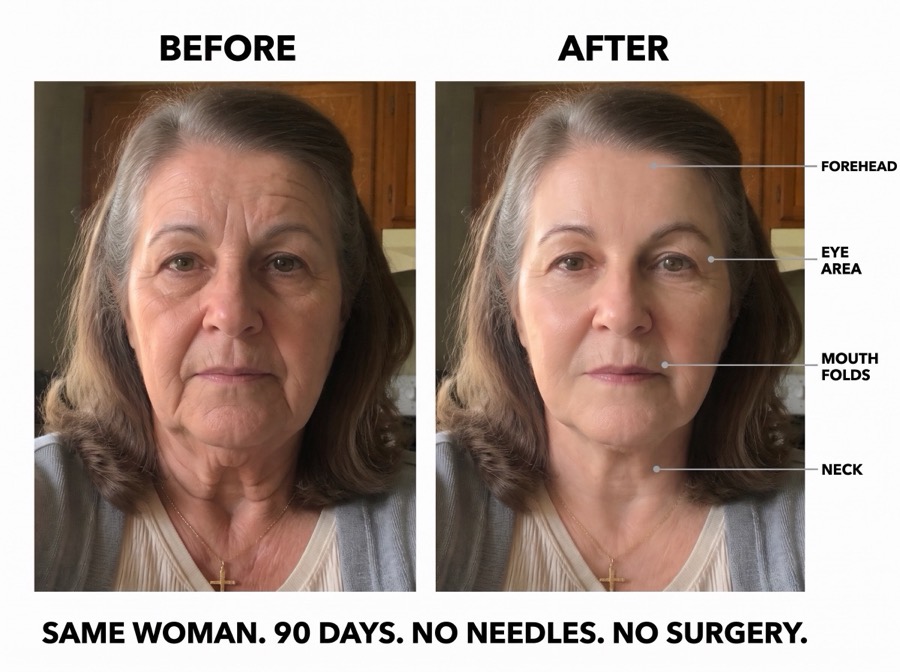
I went and stood at the mirror. The lines at my eyes looked softer. Not gone. Softer.
And I thought, well. Now.
Week three: the folds started letting go.
The deep folds around my mouth — the ones that made me look cross when I was perfectly content — were visibly shallower. Not gone. Shallower. Like a crease coming out of linen: the edges first, the center holding, but something clearly moving.
I put that morning’s photo next to day one and said out loud, alone in my own kitchen, „That is not the same face.“
Then I did something I hadn’t done in three years. I took the scarf off before I left the house. Just to the mailbox and back. Nobody saw me. But I knew.
Week four: Peggy set down her coffee.
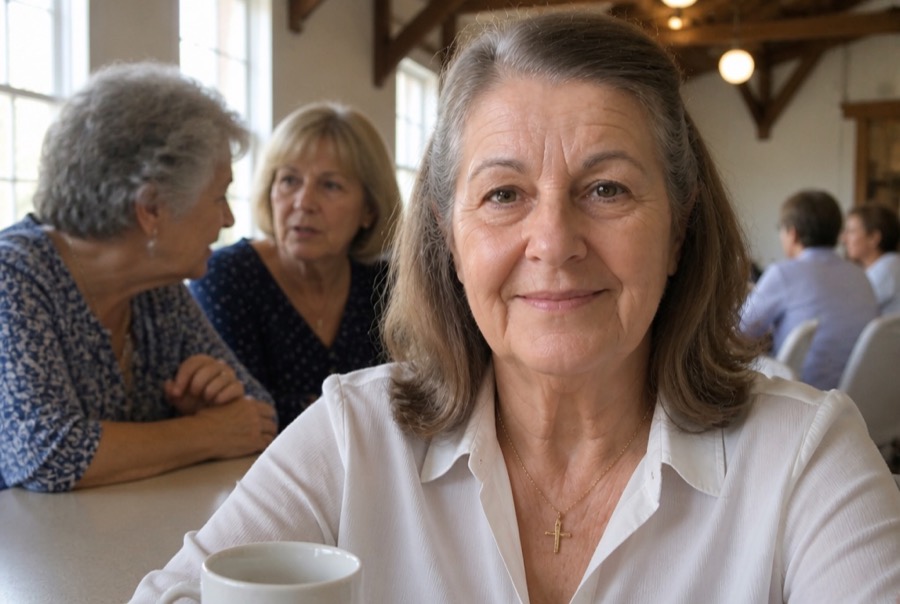
Tuesday morning. I walked into Bible study in less makeup than I’d worn in years. And no scarf.
Mi-Ja caught my eye across the room and just smiled, the way you smile when you already know.
But it was Peggy. Peggy, who has quietly been the pretty one of our group for all three decades I’ve known her, who set down her coffee and said, „Joyce. What in the world are you doing? You look wonderful.“ And then, lower, like she wasn’t sure she was allowed to ask, „Did you have something done?“
Twelve years I’d led that group and felt, if I’m honest with you, like the before-photo at the end of the table.
That morning I was the one they gathered around after the closing prayer.
I told them the truth. It’s a cream. Then I told them about Korea and the fibroblasts and the salmon, because I cannot help myself. Mi-Ja didn’t say a word. She sat there with her coffee looking extremely pleased with herself.
And then Arlene — she’s 68, hasn’t worn anything but a high collar in four years — leaned in and asked, very quietly, „Does it do anything for necks?“
I could have cried right there. Because I heard the real question underneath it. It was the same one I’d been carrying for three years.
Yes, Arlene. There is.
Week eight: the first Sunday without the scarf.
Somewhere in week eight I scraped the bottom of that first jar. I ordered two more and slept badly until they came. Take from that what you like.
By week eight I was ready for something bigger than the mailbox. Bible study is twelve women. Sunday service is the whole congregation — the same congregation that saw the retreat photo.
That Sunday I wore the one open-collar dress that never made it into the donation bag. Four years in that closet. I never once let myself ask why I was keeping it.
I left the backup scarf on the hook by the door on purpose.
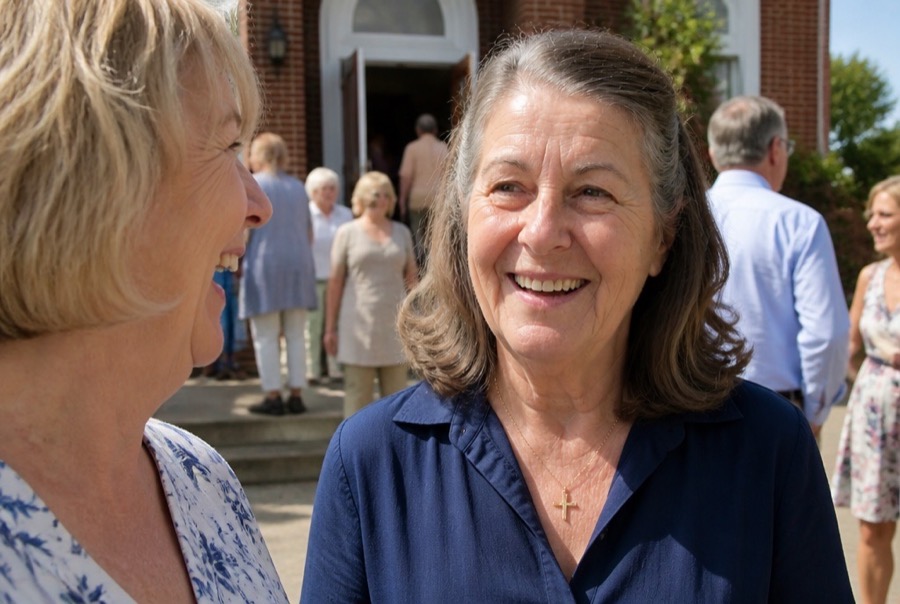
And here is what happened. Nothing.
Nobody said „your neck looks better.“ Nobody said anything at all. They just talked to me. Like I was Joyce, and not something you politely arrange your eyes around.
That was the entire point. I never wanted to be complimented. I wanted to be a person in the room.
Walking to the car afterward, Dale reached over and took my hand. He reached first. I could not tell you the last time he reached first. He held it the whole ride home and neither of us said a word about it. Forty years of marriage, you learn which silences are the good ones.
90 Days Later
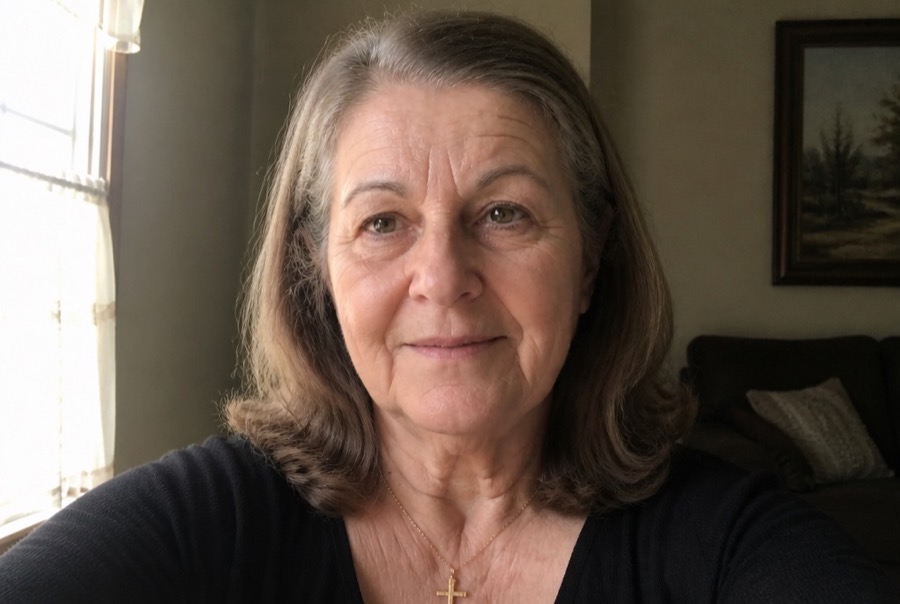
Let me be plain about what changed.
The crow’s feet, nearly gone. The forehead lines I used to hide under bangs, faint. The folds around my mouth softened enough that my whole face stopped looking pulled downward. My jaw came back. And my neck went smooth enough that I gave the turtlenecks to the church clothing drive, all eleven of them.
People stopped saying „you look well.“ They started asking what I’d had done. And when I said „it’s a cream,“ they didn’t believe me. A woman at the pharmacy last month guessed I was in my forties, and I let her, God forgive me.
Dale holds my hand in the car now. Every ride.
Last Sunday somebody took the group photo after service. For the first time in three years, I didn’t volunteer to hold the camera.
I stood in the front row. No scarf. No angling. No arranging.
And when it went up on the church Facebook page — the same page that broke my heart in a parking lot this spring — I opened it on purpose.
The woman in that photo looked like me.
„I’ve Tried Everything, Joyce. Why Would This Be Any Different?“
I can hear you asking it. I heard that same question across a clinic front desk for nineteen years.
So here’s my honest answer, nurse to friend.
Everything you have tried before was built to sit on top of your skin and hold moisture there. That is genuinely all most of it does, and it does it well. It was never built to reach the layer where a deep line is actually made, and it was never built to give a quiet cell an instruction. Nothing on that shelf was. The failure was never your skin, and it certainly wasn’t your discipline. It was the tool.
It works on dry skin, like mine. Oily. Sensitive. Combination. Sun-damaged — and after 35 years of upstate New York summers, mine qualifies.
Now the timeline. I won’t tell you you’ll wake up tomorrow looking 40. That is not how skin works, and you would be right not to trust anybody who says otherwise. Here is what actually happens, in the order it happened to me:
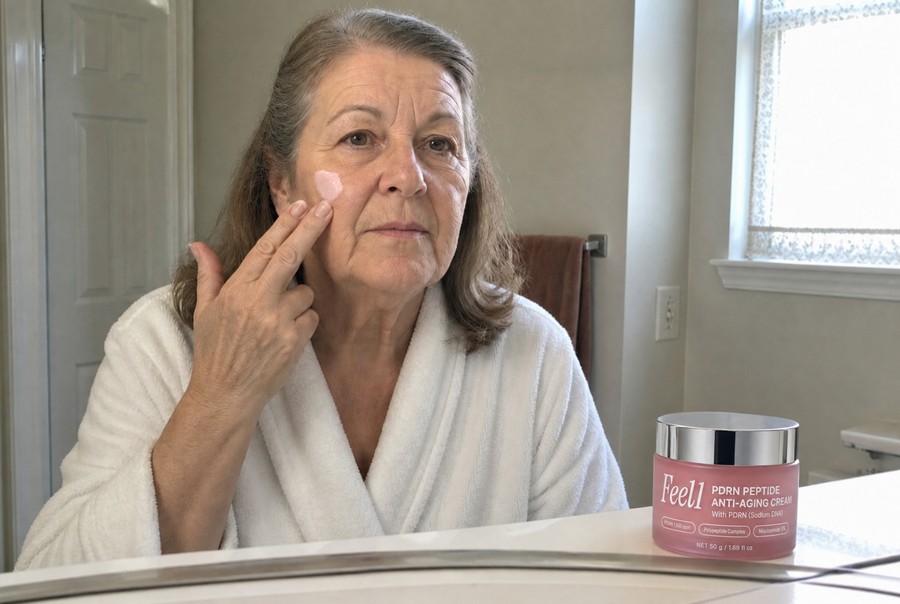
The only rule is consistency. Seven seconds, every morning, no skipping. If a stubborn, previously burned nurse in her sixties could manage something that simple, so can you.
What’s Actually In It
I checked every ingredient against the published work, because that is who I am and Dale has made his peace with it.

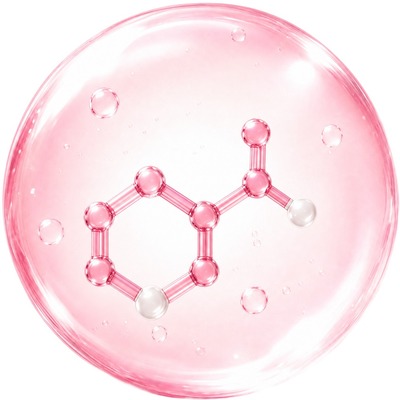

Ectoin
The guard. An extremolyte that binds water to the skin and shields the barrier[12]. It settles the low-grade daily damage from sun, pollution and stress that quietly undoes everything else — which matters enormously on skin over 55.
What Surprised Me Most
I ordered it for my wrinkles. That’s all I wanted — to stop flinching at photographs. It did that.
But that turned out to be the smaller half of it.
I sit wherever I want at that table now. Middle. Front. Wherever the light lands. I wear foundation maybe twice a week. I say yes to lunch after service. To the Sunday photo. To all of it.
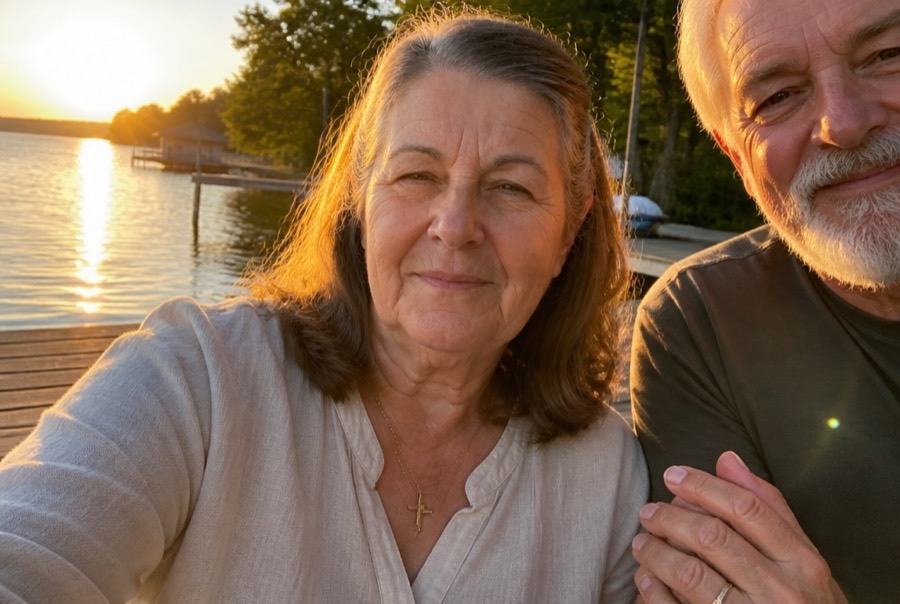
Last month Dale took a picture of me down at the lake. Just me, squinting into the sun, no occasion. He hasn’t done that since film cost money.
But the biggest change is quieter than any of that. I get ready in the morning now without thinking about my skin at all. And one day it occurred to me that that is what’s actually different. Not just how I look. How much of my attention I got back.
Three years of arranging myself. Returned to me. Seven seconds at a time.
What This Could Look Like For You
Before you scroll past this, do one thing for me.
Think about the last photo you deleted. Or the last time you were on your feet saying „I’ll take it“ before anybody finished asking.
Hold that for a second. Not to make it sting. But because you’ve carried it so long you’ve stopped noticing the weight of it.
Now come somewhere else with me.
Imagine the group photo three months from now. Somebody holds up a phone. And instead of that quiet brace you stopped registering as dread years ago, you feel nothing at all — because you already know what you look like. You saw it in the mirror this morning.
You step in. You smile. You’re in the photo.
Imagine reaching past the turtlenecks without thinking about it. Wearing the blouse you bought three summers ago and never once put on.
Imagine your granddaughter calling you the pretty grandma.
That isn’t a fantasy. It’s just what happens. Not all at once — week by week, photo by photo, until one morning you get ready without thinking about your face at all.
I had that morning. I’d like you to have yours.
Where To Get It (And How to Get the Second Jar Free)
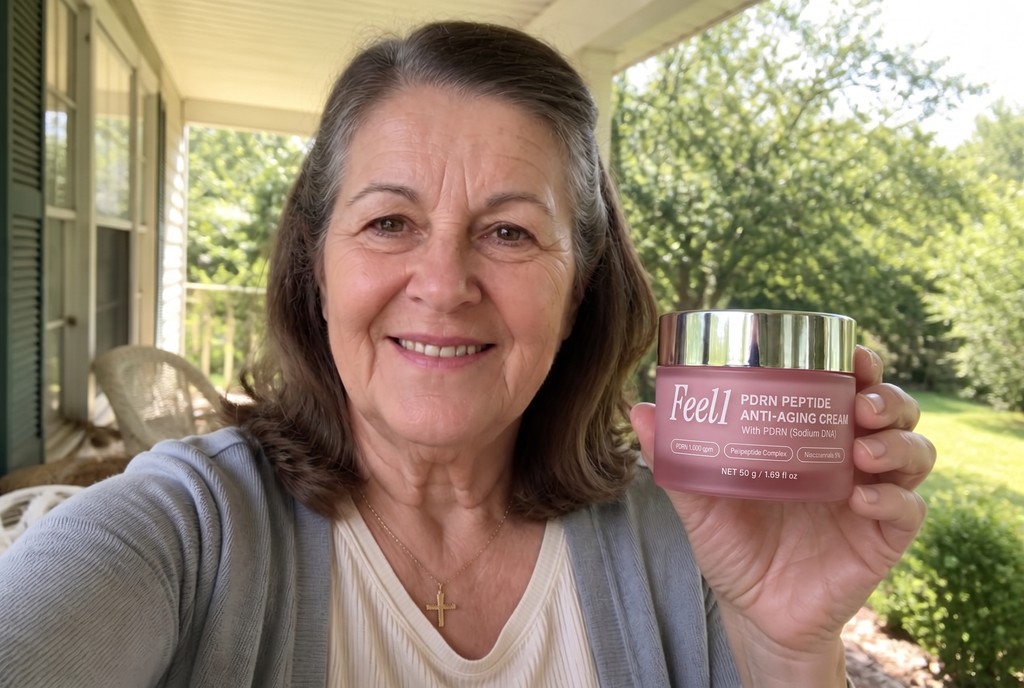
You won’t find it in a store. Not at Sephora, not at Ulta, and not behind the front desk of a clinic like the one I worked in. I watched that markup happen from the inside for nineteen years.
It’s sold only on the official site. No middlemen, no retail padding.
Reader Offer · Today
PDRN Peptide Anti-Aging Cream · 50 g · Buy 1, Get 1 Free · free US shipping · 60-day money-back guarantee
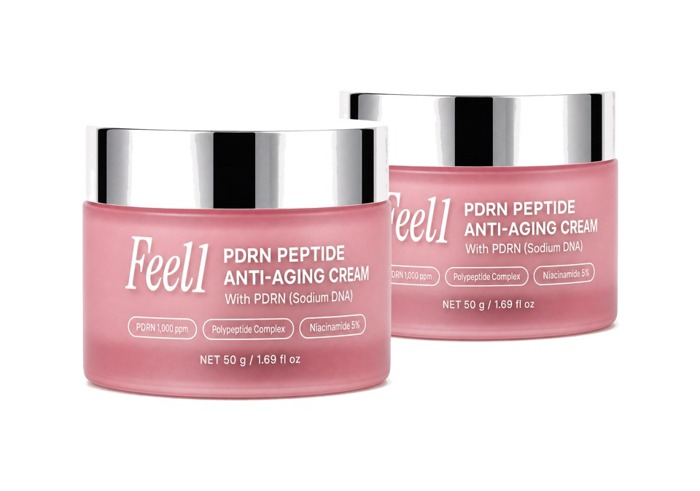
If I can give you one piece of advice from the other side of this: don’t order one jar.
I did, and I ran out in week eight, and I lost momentum for four days waiting on the mail. The real change happens between week four and week twelve. Run out at week seven and you break exactly the stretch that matters.
And this is the part that made me laugh out loud when I saw it: the second jar is free, and if you take four, it comes down to twenty-two fifty a jar. There is no version of this where ordering one jar makes sense.
Now the one catch, and it happens to be true. PDRN of this grade comes from a small number of certified facilities in South Korea, and it can’t be rushed or substituted. Every batch takes months. So it sells out — even in Korea, where women have their pick of everything. It’s been out of stock twice here since spring.
You don’t need a sister in Seoul anymore. But you do need it to be in stock.
What Other Women Are Saying
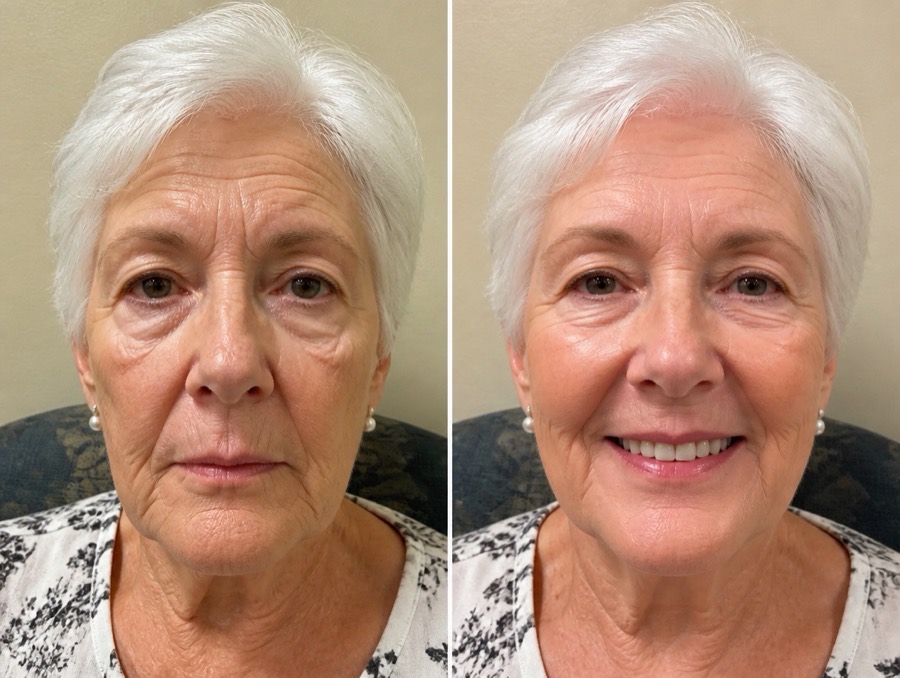
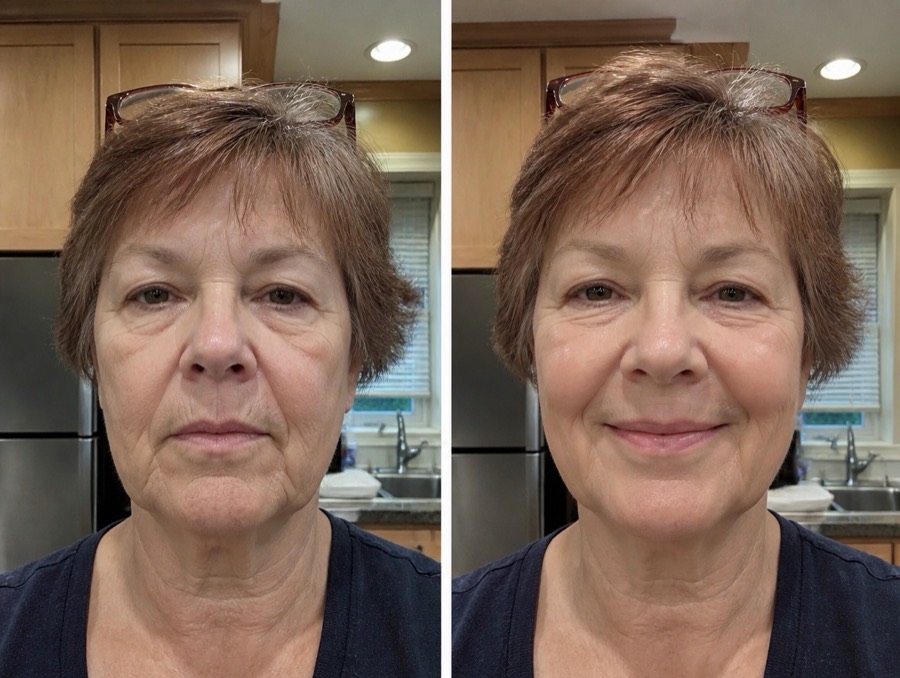
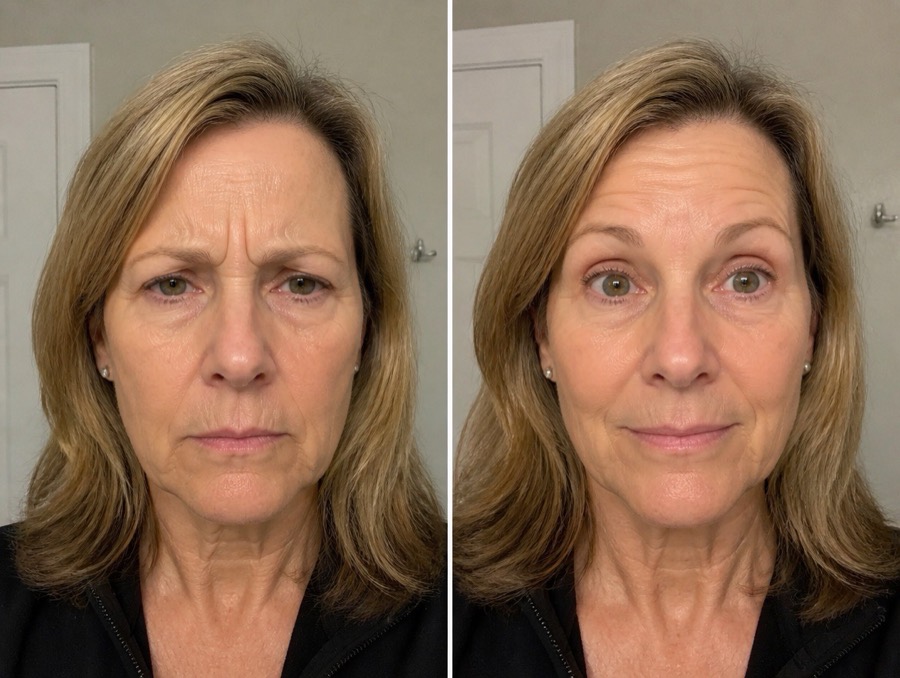
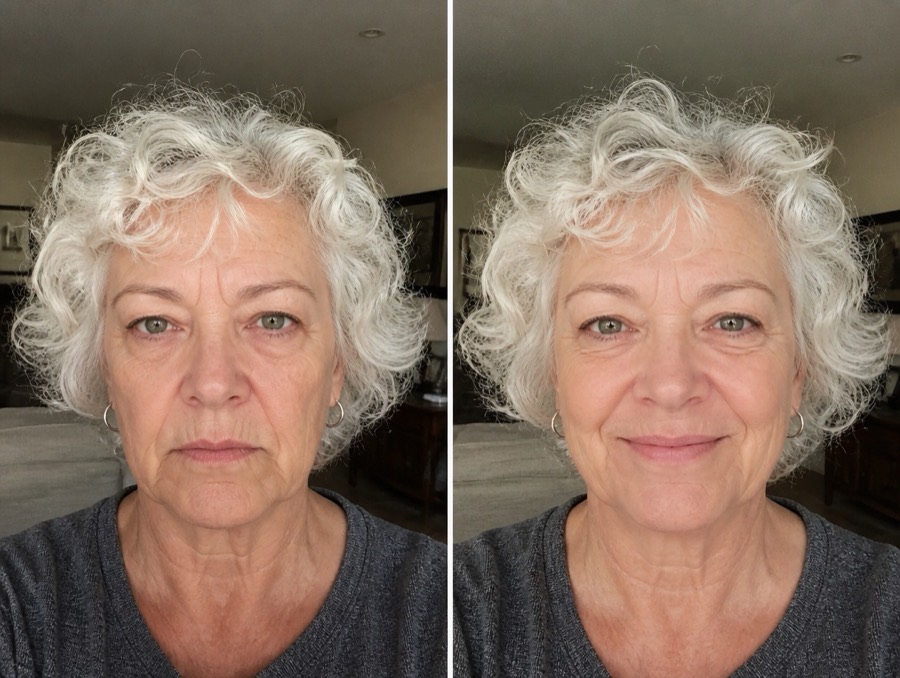
My Advice to You, Friend to Friend
I don’t know you. But if you’ve read this far, I’d wager I know how you’re tired.
Tired of learning your angles. Tired of the scarf drawer. Tired of jars that promised everything and moisturized. Tired of being on your feet saying „I’ll take it“ before anyone finishes asking.
I lived there for three years. And the difference between that woman and the one writing this came down to one decision, on one Thursday night, when I was finally tired of surrendering.
So here are your two paths.
You can close this page. Go back to the turtlenecks and the angling and the quiet arranging. Keep smiling when somebody says „you look great for your age“ and pretending those last three words don’t land where they land. Same creams. Same mirror. And three years from now, the scarf won’t just be for the neck.
Or you can do what I did. Stop treating the roof and go give the foundation something to work with. The worst that happens is a refund and a jar you keep. The best that happens is what happened to me. And to Mi-Ja. And to Peggy and Arlene and every woman at that Tuesday table who decided she wasn’t done yet.
One Last Thing Before You Decide

I’m 62 years old. And this morning I looked in the mirror and smiled at what I saw. Not „good for my age.“ Not „well preserved,“ like a jar of peaches on a shelf.
Just glad to see her.
When was the last time you did that?
I prayed for an answer more times than I’ll ever admit. Mine walked into a fellowship hall on a Tuesday morning holding a coffee cake. Consider this me carrying it over to you.
Six months from now you’ll either be the woman at your own table that everyone gathers around, wanting to know. Or you’ll still be reading pages like this one.
I know which one I’m hoping for.
218 Comments