
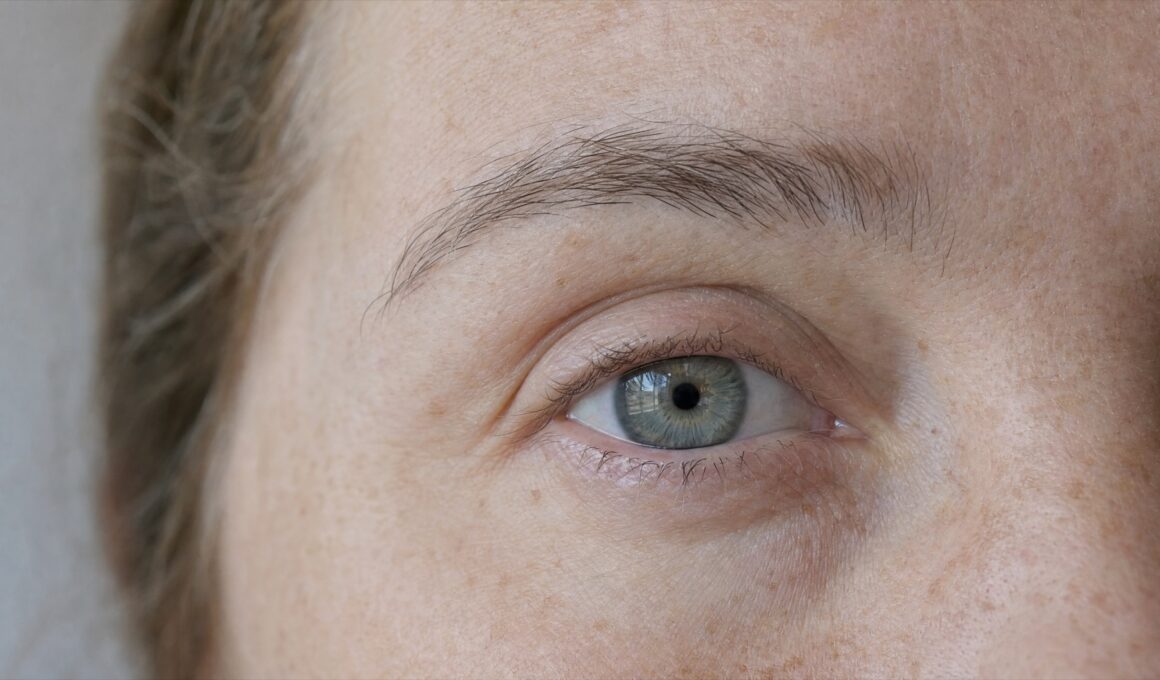
Short answer: one kind does, with proof. Prescription bimatoprost 0.03% (Latisse) is the only eyelash serum the FDA has approved, and in a controlled trial most users had visibly longer, thicker, darker lashes by week 16. Over-the-counter peptide serums condition lashes so fewer break. Expect fuller-looking, not dramatically longer.
Americans search for an “eyelash serum for growth” tens of thousands of times a month, and three very different kinds of product answer to that name. This is not a ranking. It is the evidence and the timeline.
👁 Lash serums at a glance
- Proven: prescription bimatoprost 0.03%, FDA-approved in 2008.
- Plausible, less documented: over-the-counter serums with a prostaglandin analog. Not FDA tested.
- Supportive: prostaglandin-free peptide, biotin and panthenol serums. Small studies only.
- Timeline: judge nothing before week 8, decide at week 12 to 16.
- Oils and vitamins: no good evidence for growth.
Do eyelash serums really work?
It depends on what is in the tube. “Serum” covers a prescription drug with a full clinical file, cosmetics that borrow that drug’s mechanism without its testing, and conditioners built on peptides and vitamins. A 2024 review in the Journal of Cosmetic Dermatology drew the same line: solid evidence for bimatoprost, potential but open safety questions for other prostaglandin-type ingredients, and promising but informal data for the rest. So: yes for one class, maybe for the second, modestly for the third.
| Class | Example ingredient | How it is regulated | Evidence | Realistic result |
|---|---|---|---|---|
| 1. Prescription | Bimatoprost 0.03% (Latisse and generics) | FDA-approved drug, 2008 | Randomized, controlled trial, 278 adults, 16 weeks | Longer, thicker, darker lashes in most users; known side effects |
| 2. OTC with a prostaglandin analog | Isopropyl cloprostenate and relatives | Sold as cosmetics; not FDA tested | Plausible, thinly studied | Possibly similar in kind; safety less documented |
| 3. OTC without prostaglandins | Peptides, biotin, panthenol, hyaluronic acid | Cosmetics | Small studies, mostly brand-funded, often no control group | Fuller-looking lashes with less breakage over 8 to 12 weeks |
One caution: sudden, patchy or one-sided lash loss belongs with a doctor before any serum.
Do any lash growth serums actually work?
Yes: bimatoprost 0.03%. It began as a glaucoma eye drop. Patients noticed longer, darker lashes, the maker tested that side effect on purpose, and in 2008 the FDA approved it as Latisse for inadequate lashes, which doctors call eyelash hypotrichosis.
The key trial, published by Smith and colleagues in the Journal of the American Academy of Dermatology in 2012, randomized 278 adults to bimatoprost or the same solution without the drug, once a night on the upper lid margin. At week 16, 78 percent of the bimatoprost group were rated at least one grade better on the investigators’ lash scale, against 18 percent of the comparison group. Per the FDA label, average lash length rose by 1.4 mm, about 25 percent, and lashes were measurably thicker and darker. Two caveats from the paper: the trial ran five months, and Black participants were not enrolled because of limits in the imaging method.
It is a drug, with drug side effects. The label lists itchy eyes, redness and darker eyelid skin in roughly 3 to 4 percent of users. Darkening of the iris is rare but likely permanent. A conversation for a prescriber, not a reason for panic.
The second class is where labels need reading. Many over-the-counter serums contain a prostaglandin analog, a chemical relative of bimatoprost; look for isopropyl cloprostenate or similar names containing “prost” on the ingredient list. An effect is plausible. But these are sold as cosmetics, and the American Academy of Ophthalmology puts it plainly: because they have not been FDA tested, their safety and effects are not known. In April 2011 the FDA sent a warning letter to the maker of three lash and brow products containing isopropyl cloprostenate, calling them unapproved new drugs because of their growth claims.
What peptide and vitamin serums can realistically do
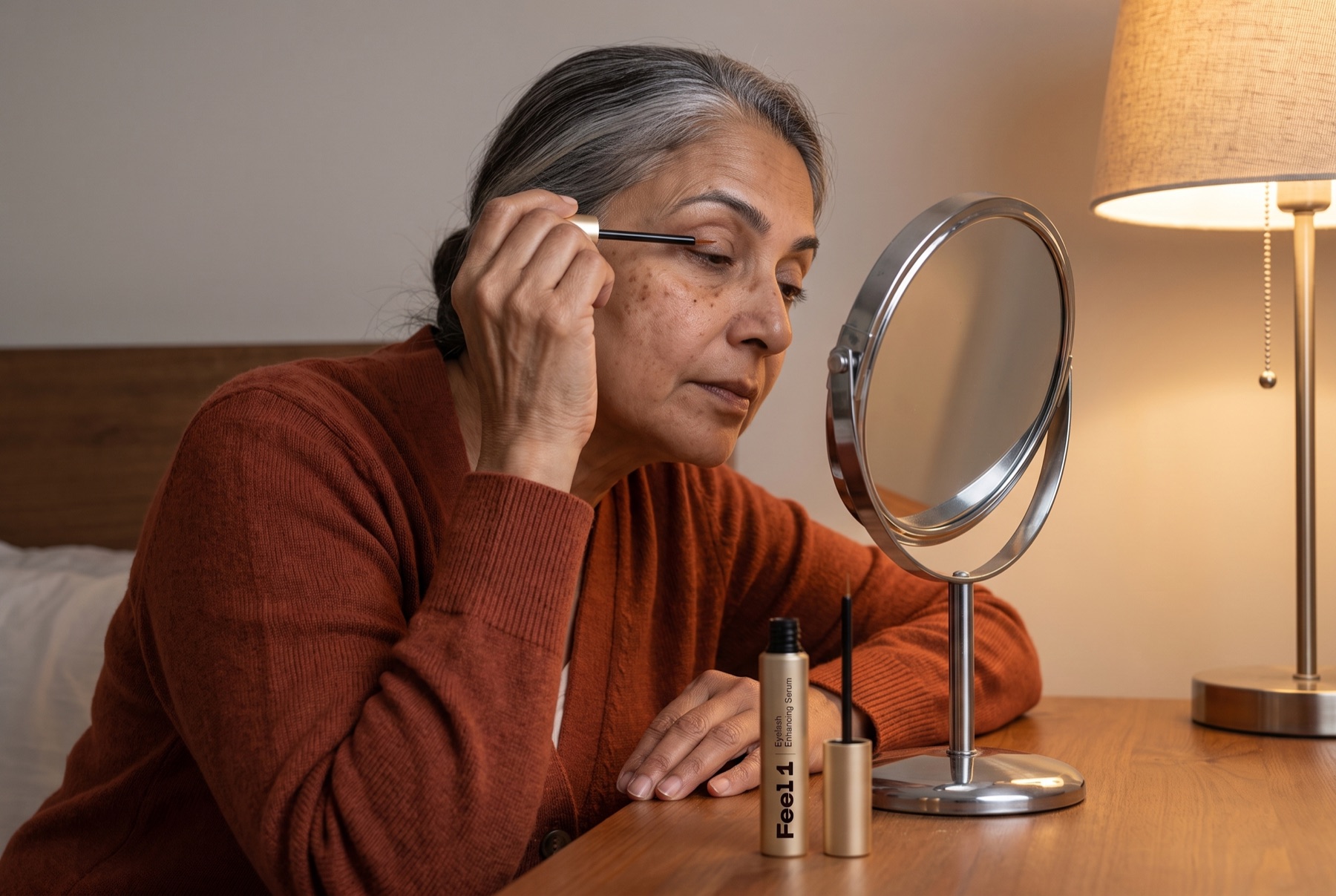
The third class avoids prostaglandins altogether. Typical ingredients are short peptides such as myristoyl pentapeptide-17 and biotinoyl tripeptide-1, plus panthenol, biotin and hyaluronic acid, chosen to condition the hair and the skin it grows from.
The evidence is thinner. Published studies are small, usually paid for or run by the brand, and often lack a comparison group, so you cannot tell the serum from three months of being gentler with your lashes. We explain how to read such claims in our guide to “clinically proven” labels.
What these serums can plausibly do is keep more of the lashes you grow. A conditioned lash is less brittle, so fewer snap during makeup removal, and the lash line looks fuller. The realistic expectation is fuller-looking lashes with less breakage over 8 to 12 weeks, not the millimeters measured in the drug trial. In exchange, you avoid the prostaglandin side effects.
How long does a lash serum take to work?

Longer than the box suggests. Every lash runs through a growth phase (anagen), a short transition and a long resting phase, then falls out and a new one starts. According to a review in the Journal of Optometry, a lash grows 0.12 to 0.14 mm a day, the growth phase lasts only four to ten weeks, and the full cycle takes four to eleven months. That is why lashes rarely pass 12 mm.
Only some of your lashes are growing at any moment, and no serum can do anything for a lash that is already resting; you wait for the next generation. The bimatoprost trial matches that biology: almost nothing at week 4, half of users improved at week 8, most of the effect by week 12 to 16. The FDA label says the effect is not significant for most people until about two months.
Use the same calendar for a cosmetic serum: judge nothing before week 8, decide between week 12 and 16.
📅 Lash Growth Timeline
Drag the slider from week 0 to week 16. For each stage you see what the lash cycle is doing and what is realistic with prescription bimatoprost and with a prostaglandin-free peptide serum. Nothing leaves your browser.
Bimatoprost percentages are the share of trial participants with at least a one-grade improvement on the investigator’s lash scale, from the FDA prescribing information (137 people on the drug, 141 on the drug-free solution). The peptide column describes a realistic expectation, not a trial result. Not medical advice.
How often should you put on a lash serum?
As often as the directions say and no more. For bimatoprost that is once a night; the label states that extra applications will not increase growth. Cosmetic serums call for once or twice a day.
What grows lashes fast naturally?
Nothing grows them fast. The follicle sets the pace, and no kitchen remedy has been shown to change it.
Castor oil is the most searched. No good human trial shows longer lashes; it coats the hair, so lashes look glossier and may break less. The American Academy of Ophthalmology warns that it is not sterile and can irritate the eye and damage the cornea. Petroleum jelly (Vaseline) is the same story: a coating, not a growth signal. Biotin supplements help hair only in people who are deficient, which is uncommon, and the FDA has warned that high doses can distort certain blood tests.
What pays off is unglamorous: take mascara off with a soaked pad instead of rubbing, and go easy on waterproof formulas, curlers and extensions. The same habit-first logic runs through our fall skin reset. None of it adds millimeters; all of it keeps the lashes you have on your lid longer.
Three products, three classes of evidence: how we compared
We did not test these products and we are not ranking them. We compared published facts: ingredient list, prostaglandin-free declaration, directions, price and return policy. Prices approximate as of September 2026.
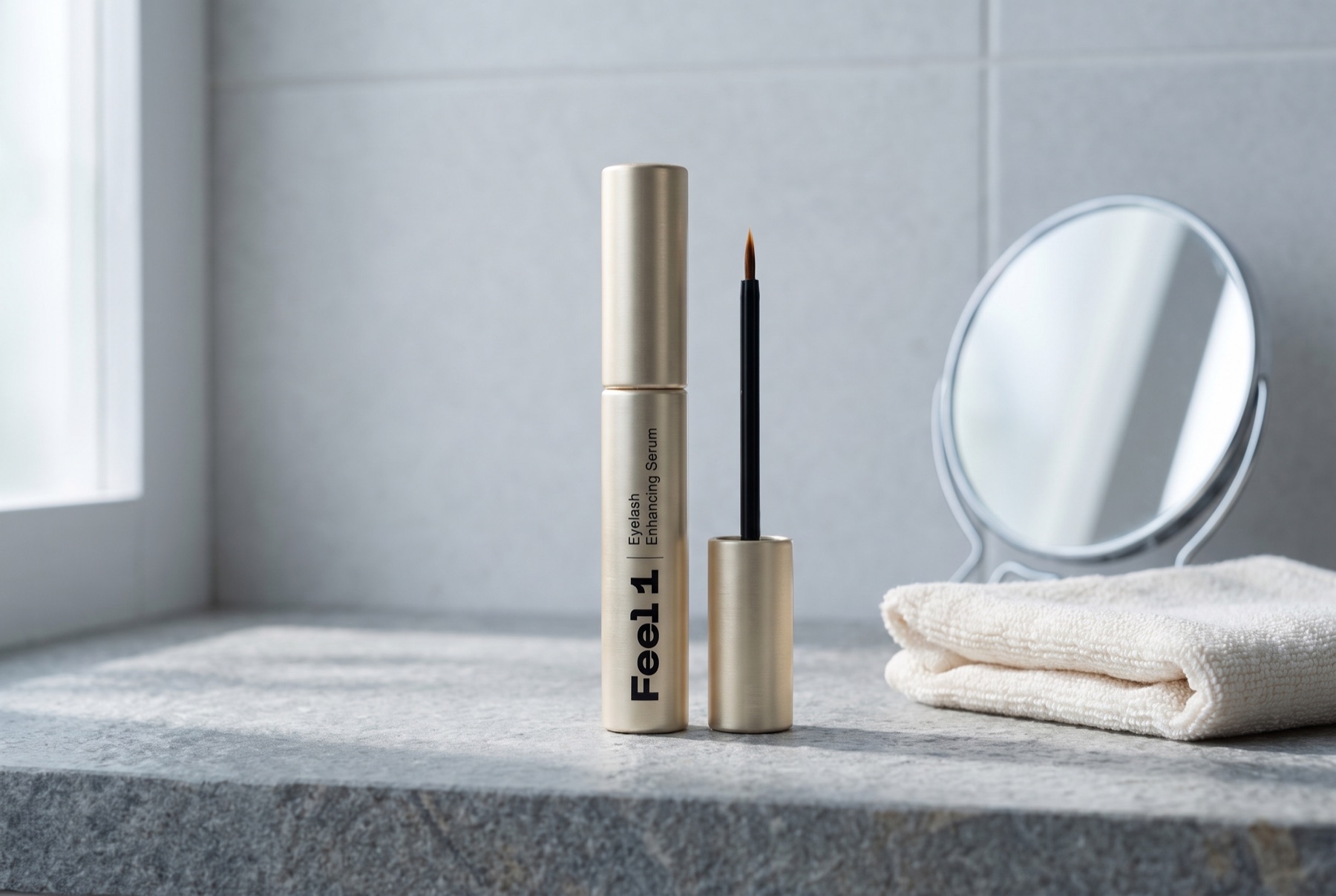 Feel1 states that its peptide formula contains no prostaglandins or prostaglandin analogs.
A prostaglandin-free option for lashes and brows
Feel1 sits in the third class: a cosmetic peptide serum, not a drug. What speaks for it on paper:
- No prostaglandins or analogs, according to the brand.
- One tube for lashes and brows. A fine brush on a slim wand, used once a day along the upper lash line and through sparse brow areas.
- A conditioning formula: peptides, hyaluronic acid, biotin and centella.
- A money-back guarantee, useful for a product you can only judge after two to three months. Check the current terms.
The limits: it costs more than the budget option and has no drug-grade trial. It may help lashes and brows look fuller and break less; it will not match a prescription drug for length.
The ingredient list and directions are on the Feel1 Eyelash and Eyebrow Peptide Serum product page. The brand’s journal also explains how lash serums without prostaglandins differ from the prescription route.
How to choose: for the strongest evidence, talk to a doctor about bimatoprost. To avoid the prostaglandin mechanism, pick a serum whose brand states in writing that it is prostaglandin-free, take your week 0 photo, and give it twelve weeks.
Frequently asked questions
Can I use eyelash serum on my eyebrows?
What happens when you stop using lash serum?
Does castor oil grow eyelashes?
What does Kim Kardashian use for eyelash growth serum?
Sources
📚 Sources
- Smith S, Fagien S, Whitcup SM, et al., Eyelash growth in subjects treated with bimatoprost: a multicenter, randomized, double-masked, vehicle-controlled, parallel-group study, J Am Acad Dermatol (2012), PubMed: https://pubmed.ncbi.nlm.nih.gov/21899919/
- U.S. Food and Drug Administration, Latisse (bimatoprost ophthalmic solution) 0.03% prescribing information: https://www.accessdata.fda.gov/drugsatfda_docs/label/2012/022369s005lbl.pdf
- American Academy of Ophthalmology, What You Should Know About Eyelash Growth Serums: https://www.aao.org/eye-health/tips-prevention/latisse
- Baiyasi M, St Claire K, Hengy M, et al., Eyelash serums: A comprehensive review, J Cosmet Dermatol (2024), PubMed: https://pubmed.ncbi.nlm.nih.gov/38475901/
- Aumond S, Bitton E, The eyelash follicle features and anomalies: A review, J Optom (2018): https://www.journalofoptometry.org/en-the-eyelash-follicle-features-anomalies-articulo-S1888429618300487
- U.S. Food and Drug Administration, Warning Letter to Lifetech Resources LLC, April 18, 2011 (FDA archive): https://wayback.archive-it.org/7993/20170112194223/http://www.fda.gov/ICECI/EnforcementActions/WarningLetters/2011/ucm251951.htm
- American Academy of Ophthalmology, Scariest Eye Remedies on the Internet (castor oil): https://www.aao.org/eye-health/tips-prevention/scariest-eye-cures-viral-tiktok-influencer