

Short answer: for wrinkles, retinol and its prescription relatives are the better-proven choice, with decades of controlled trials behind them. PDRN is a soothing, hydrating ingredient with solid wound-healing research but only early cosmetic data. You do not have to choose: many people use a retinoid at night and a PDRN cream as the support layer.
Search for PDRN and Google offers a fight: PDRN or retinol? It is an odd matchup. One is the most studied anti-aging ingredient in dermatology. The other arrived from Korean clinics a few years ago. Here is what each can do, and how to use both.
🧪 PDRN vs. retinol at a glance
- Retinoids: the proven wrinkle active. Expect three to six months before lines look softer, and some dryness on the way.
- PDRN: salmon-derived DNA fragments. Good research in wound healing and in-office treatments; evidence for creams is small and early.
- Together: yes. Nothing in PDRN interferes with retinol, and the cream can make retinol easier to tolerate.
- Order: thin before thick. Retinol serum on dry skin, PDRN cream over it. A watery PDRN serum goes on before retinol.
- Non-negotiable: sunscreen every morning. Without it, neither ingredient is worth the money.
Is PDRN better than retinol?
No, not on the evidence. Retinoids are the family of vitamin A derivatives that includes over-the-counter retinol and retinal and prescription tretinoin. A widely cited review in Clinical Interventions in Aging calls tretinoin the most extensively investigated retinoid for photoaged skin, and it is FDA-approved by prescription for fine wrinkles caused by sun damage. Over-the-counter retinol is weaker but not empty: in a randomized University of Michigan trial, a 0.4% retinol lotion applied for 24 weeks visibly reduced fine wrinkling compared with the plain lotion, and skin samples showed more collagen being made.
PDRN has nothing like that record for wrinkles. What it has is a respectable history in wound care and a growing number of small studies from aesthetic clinics, where it is delivered with a needle, not a jar. A 2026 systematic review found just seven randomized trials with 183 participants in total across skin rejuvenation, scars and wound healing, and called for larger studies. That is promising, and it is early.
| Retinoids (retinol, retinal, tretinoin) | PDRN (topical) | |
|---|---|---|
| What it is | Vitamin A derivatives | Short DNA fragments, usually from salmon, listed as sodium DNA |
| Evidence for wrinkles | Decades of randomized trials; tretinoin is FDA-approved by prescription for photoaging | Small, early studies; most PDRN research is on wound healing and in-office procedures |
| Time to visible change | Three to six months of regular use (Harvard Health) | Not established for creams; hydration is felt the same day |
| Typical downsides | Dryness, peeling, sun sensitivity; not for use in pregnancy | Few reported; not suitable with a fish allergy without medical advice |
| Best role | The proven active, at night | The soothing, hydrating support layer, morning or night |
So the ranking is not close. But if retinol leaves your face red and flaking by week two, you will not still be using it in month six. That is where PDRN earns its place.
What PDRN is, in three sentences
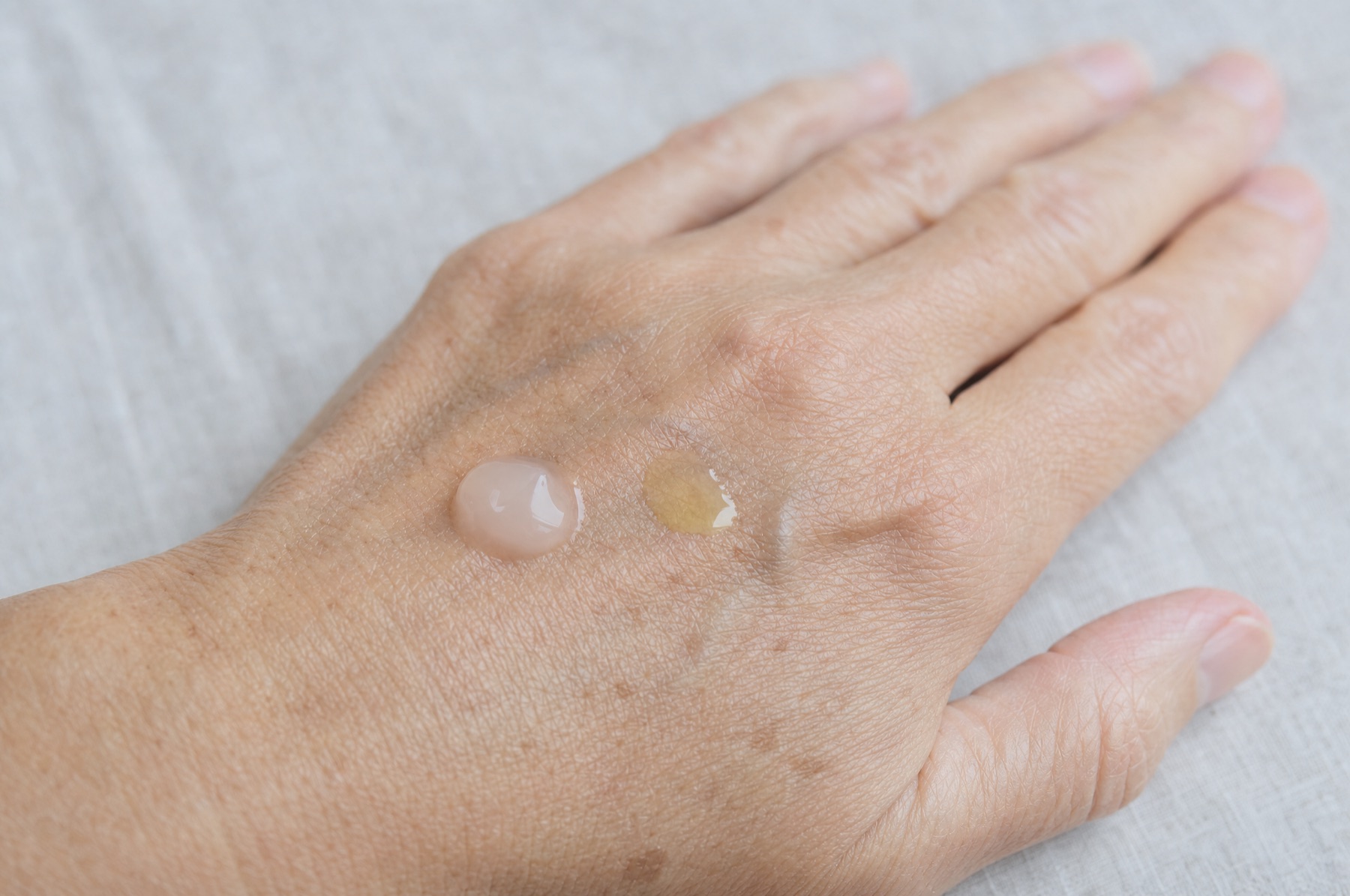
PDRN stands for polydeoxyribonucleotide: short fragments of DNA, usually purified from salmon, that appear on ingredient lists as sodium DNA. In lab and wound-healing studies it acts on a receptor involved in tissue repair and calms inflammatory signals, which is why physicians used it on slow-healing wounds long before it reached skincare. In a cream it behaves mostly as a water-binding, soothing ingredient; whether it does more through intact skin is still being worked out. For the longer version, Feel1’s journal has a readable explainer on what PDRN is and how it is made.
Which is better for wrinkles, retinol or PDRN?
Retinol. Retinoids speed up cell turnover and prompt the skin to make more collagen. Harvard Health puts the timeline at three to six months of regular use before wrinkles look better, with the best results after six to twelve months, and notes that the benefit lasts only as long as you keep using the product.
What about the headlines that PDRN beats retinol? They trace back to a handful of small studies. One 2026 paper in PLoS One reported that an eye cream with a specific PDRN preparation outperformed a low-dose retinol over four weeks in a split-face test. Several of its authors work for a skincare company, and four weeks is long before a retinoid shows what it can do. A reason to keep watching PDRN, not to drop the retinoid.
Where PDRN creams plausibly help is indirect. Well-hydrated skin looks smoother, and fine dehydration lines soften within hours of a good humectant cream. That effect is real, visible and temporary.
Can I use PDRN with retinol?

Yes. There is no known interaction between the two, and they do different jobs. Retinol asks something of your skin. PDRN creams, which often also carry niacinamide, glycerin or ceramides, give something back: water and a calmer surface.
That matters because irritation is the main reason people give up on retinoids. The American Academy of Dermatology advises starting with the mildest formula, applying it every other night at first, and using a moisturizer to reduce dryness. A PDRN cream is one way to follow that advice; a plain ceramide cream is another.
Three groups should be careful. If you are pregnant or trying to conceive, skip retinoids entirely; the AAD is clear on that. If you have rosacea, eczema or very reactive skin, talk to a dermatologist before starting a retinoid. And if you have a fish allergy, ask your doctor before using salmon-derived PDRN. Colder months make all of this harder, so consider adjusting your routine when the heating comes on before adding a new active.
Should I apply PDRN or retinol first?
It depends on the texture, not the ingredient. The rule that settles almost every layering question is thin before thick: watery products first, creams last. Applied to this pair:
Think you have it? Put the five products in order for an evening and a morning routine. Each tap tells you why.
🧪 Layering Order Quiz
Pick a routine, then tap the products in the order you would apply them. You get a one-line reason after every tap. One product in each routine does not belong at that time of day. Nothing leaves your browser.
General layering logic based on AAD guidance and product directions, not personal medical advice. If a product label says otherwise, follow the label.
What do Koreans use instead of retinol?
First, a correction: Koreans do use retinol and retinal, and Korean brands sell both. What differs is the philosophy. Korean skincare puts the skin barrier first and reaches for gentler actives before a strong one. The usual alternatives:
Common retinol alternatives in Korean skincare
- Bakuchiol: a plant extract with the best head-to-head data. In a 12-week randomized trial of 44 people, 0.5% bakuchiol twice daily reduced wrinkle surface area about as well as 0.5% retinol, with less scaling and stinging.
- PDRN: the newcomer. Soothing and hydrating; wrinkle evidence for creams is early.
- Niacinamide: vitamin B3, well studied for uneven tone and barrier support.
- Centella asiatica (cica): a calming plant extract used in barrier creams.
- Peptides and ginseng extracts: popular, pleasant, and thinly studied in finished products.
None of these matches a retinoid for wrinkles; several make a retinoid easier to live with. And when a box says an alternative is “clinically proven” to beat retinol, it helps to know what that phrase does and does not mean on a label.
Three products, compared on paper
How we compared: we did not test these products on anyone. We read the published ingredient lists, format, packaging and price per milliliter on the brands’ own sites. Prices approximate as of September 2026.
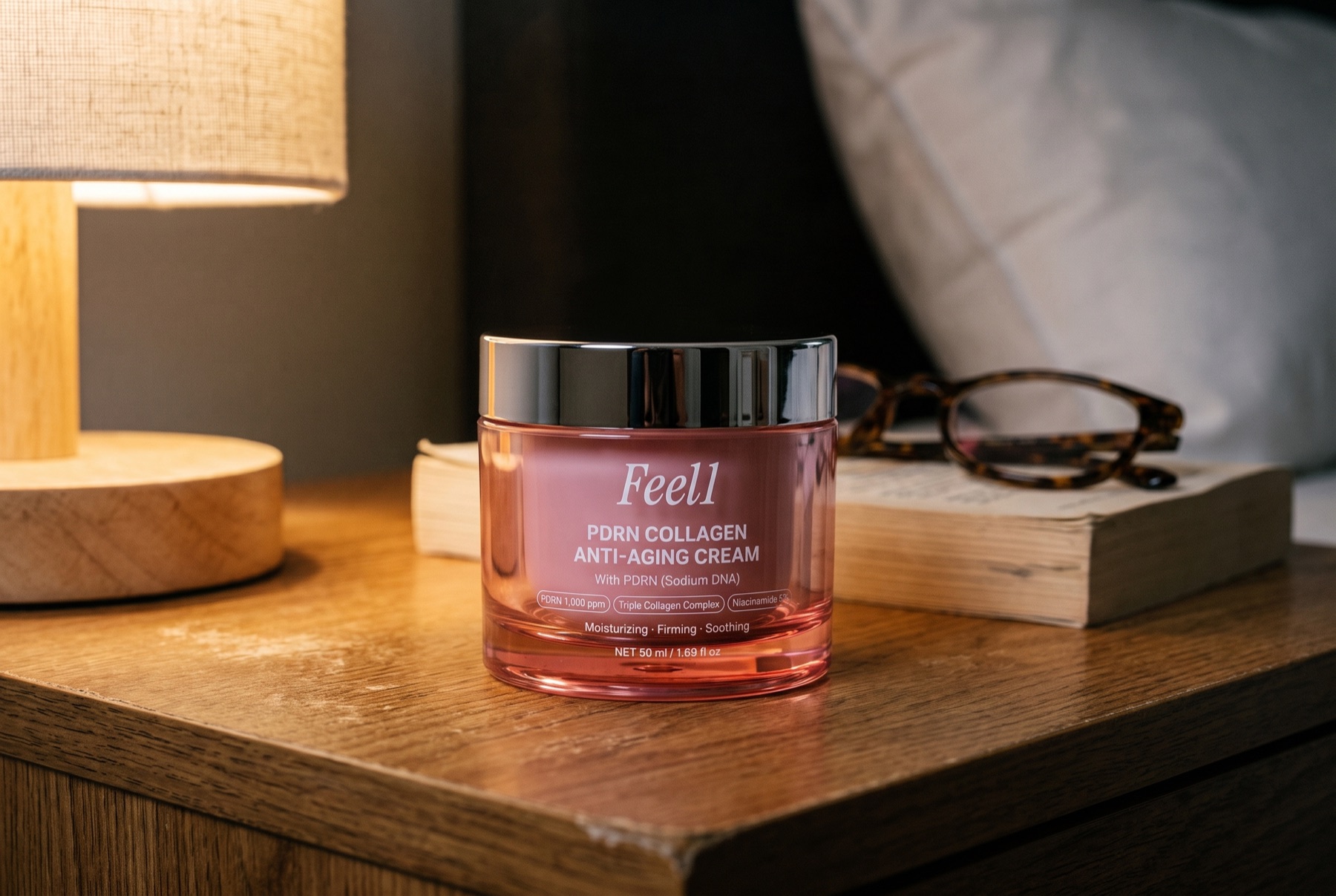
Feel1 PDRN Capsule Cream
Not a retinol rival. It is the cream that goes over your retinol, or replaces it on nights your skin needs a break.
- The plus: the label names its actives plainly: PDRN (sodium DNA), a triple collagen complex and niacinamide. Made in Korea, with no retinoid in the formula, so it fits morning and evening.
- Also a plus: a money-back policy stated on the product page.
- The catch: it comes in a jar, which is less hygienic than a pump; use clean fingers or a spatula. Collagen in a cream moisturizes the surface; it does not become collagen in your skin. A plain drugstore ceramide cream costs less and also buffers retinol.
Ingredients and directions are on the Feel1 PDRN Capsule Cream product page. Alongside a retinoid, it may help skin feel calmer and look more hydrated.
If you buy only one thing, buy the retinoid, plus sunscreen. The second purchase should be whatever keeps you using the first.
Frequently asked questions
Which two serums cannot be used together?
What works 11 times faster than retinol?
Can PDRN replace retinol completely?
How often should I use PDRN with retinol?
Sources
📚 Sources
- American Academy of Dermatology, Retinoid or retinol?: https://www.aad.org/public/everyday-care/skin-care-secrets/anti-aging/retinoid-retinol
- Harvard Health Publishing, Do retinoids really reduce wrinkles?: https://www.health.harvard.edu/staying-healthy/do-retinoids-really-reduce-wrinkles
- Mukherjee et al., Retinoids in the treatment of skin aging: an overview of clinical efficacy and safety, Clin Interv Aging (2006), PMC: https://pmc.ncbi.nlm.nih.gov/articles/PMC2699641/
- Kafi et al., Improvement of naturally aged skin with vitamin A (retinol), Arch Dermatol (2007), PubMed: https://pubmed.ncbi.nlm.nih.gov/17515510/
- Squadrito et al., Pharmacological Activity and Clinical Use of PDRN, Front Pharmacol (2017), PMC: https://pmc.ncbi.nlm.nih.gov/articles/PMC5405115/
- Alhussain et al., Polynucleotides and Polydeoxyribonucleotides for Skin Rejuvenation, Postoperative Scar Prevention, and Wound Healing: A Systematic Review of Randomized Clinical Trials, Cureus (2026), PMC: https://pmc.ncbi.nlm.nih.gov/articles/PMC13453133/
- Dhaliwal et al., Prospective, randomized, double-blind assessment of topical bakuchiol and retinol for facial photoageing, Br J Dermatol (2019), PubMed: https://pubmed.ncbi.nlm.nih.gov/29947134/