

Short answer: PDRN (polydeoxyribonucleotide) is purified DNA fragments from salmon or trout milt, first used in Italian and Korean wound medicine. Injected, it has real clinical data. In a cream the evidence is thin: expect hydration, soothing and barrier support, not a transformation, and keep your sunscreen and retinoid.
Pink jars labeled PDRN have moved from Seoul pharmacies to the shelves at Ulta and Costco, and the ads promise rebuilt collagen, a clinic facial in a jar, results in days. Some of that traces back to real medicine. Most of it skips a step.
🧬 PDRN at a glance
- What it is: purified DNA fragments, usually from salmon or trout milt. Label name: sodium DNA.
- History: a wound-healing drug in Italy, then a clinic injectable in Korea, now a cosmetic ingredient.
- Best evidence: injections for hard-to-heal wounds. For creams: a few small, short studies.
- What to expect from a cream: a calm, hydrating layer that most skin tolerates well.
- What not to expect: a replacement for daily sunscreen or a retinoid.
What is PDRN in skincare?

PDRN is short for polydeoxyribonucleotide, which is a technical way of saying chains of DNA building blocks. In skincare it means DNA extracted from fish, cut into fragments and purified. Ingredient lists do not use the abbreviation; the name to look for is sodium DNA.
The ingredient did not start in beauty. According to a 2017 review by pharmacologists at the University of Messina, PDRN is a registered drug in Italy, made from the sperm DNA of salmon trout or chum salmon and used to help tissue repair. In the best human study, a randomized trial from 2014 in 216 people with diabetic foot ulcers, about 37 percent of those injected with PDRN had fully healed after eight weeks, compared with about 19 percent on placebo. A real result, in a very different setting from a bathroom shelf.
Korea turned the drug into a beauty treatment. In Seoul clinics, injectable skin boosters of the Rejuran type place similar salmon DNA fragments into the dermis with a fine needle, which is what made the ingredient famous. A 2025 systematic review found nine studies with 219 patients, of low to moderate quality: promising for texture and elasticity, with mild side effects. As of September 2026 none of these injectables has FDA approval in the United States.
Is PDRN salmon sperm?
In origin, yes. The raw material is milt, the sperm-containing fluid of male salmon or trout, a by-product of the fishing industry. Sperm cells are used for a practical reason: they are little more than a tightly packed bundle of DNA.
What ends up in a product is not sperm, though. The DNA is extracted, cut into fragments, purified and sterilized. The Messina review describes a process designed to leave no active proteins or peptides behind, since proteins are what usually cause immune reactions. The finished ingredient is a purified powder of DNA fragments. It contains no cells and nothing alive.
What does PDRN do for your face?
Start with what it does in a lab. PDRN fragments bind to a docking site on cells called the adenosine A2A receptor. Switching that receptor on calms inflammation and prompts the growth of new blood vessels. The fragments also serve as spare parts that dividing cells recycle, a route biologists call the salvage pathway. In cell cultures, fibroblasts, the cells that make collagen, multiply faster. In diabetic mice, treated wounds closed sooner.
Now the honest gap. All of that happened with PDRN injected into tissue or applied to wounds. Your face is covered by an intact barrier built to keep large molecules out. A well-known rule in dermatology says that substances above about 500 daltons struggle to cross healthy skin. Pharmaceutical PDRN ranges from 50,000 to 1,500,000 daltons, from a hundred to several thousand times over that line. Most of what you apply stays in the upper layers, where it behaves much like hyaluronic acid: it binds water and leaves skin feeling smoother. That, realistically, is what a cream does for your face: more hydration, less tightness, a calmer look.
Is there any direct evidence for a cream? A little. A 2026 study in PLoS One reported that a medium-length PDRN did reach the living layers of the epidermis, and in a short split-face trial its 0.1 percent eye cream outperformed a retinol cream on measured wrinkles, with good tolerability. It is one trial of a few weeks, several of its authors work for a skincare company, and nobody has repeated it. Encouraging, not settled.
Is PDRN good for your skin?
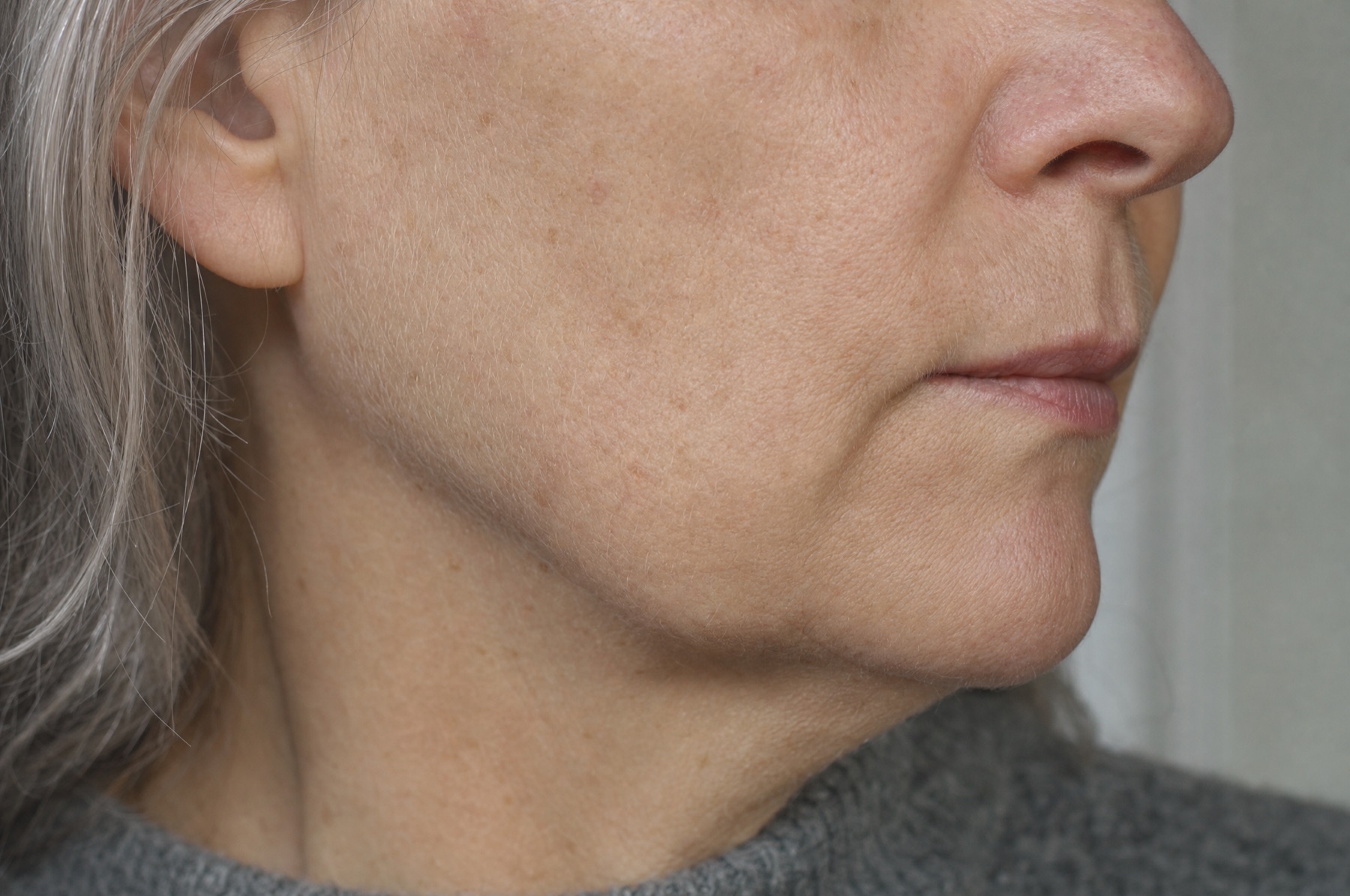
Yes, in a modest way, and for some people more than others. PDRN products are, first of all, gentle hydrators. PDRN is neither an acid nor a retinoid, and the published studies, injected and topical, report few and mild side effects.
That makes PDRN most useful for skin that does not get along with stronger ingredients. If a retinoid leaves your cheeks flaky every winter, or your skin has become drier and more reactive since menopause, a calm hydrating layer is what is missing. Irritation is a common reason people give up on a retinoid, so a product that makes the routine tolerable has real value.
What it is not: a substitute for the two things with decades of evidence. The American Academy of Dermatology builds its anti-aging advice on daily broad-spectrum sunscreen and, for lines and uneven tone, a retinoid. Nothing published on PDRN creams comes close to that record. For dark spots, vitamin C and niacinamide have far better human data; we looked at the first in our comparison of vitamin C serums.
One filter helps when you shop. The FDA does not review cosmetics before sale, and a promise to increase the skin’s collagen production is, by the agency’s own definition, a drug claim. If an ad leans on phrases like that, read our guide to what “clinically proven” really means on a label first.
How quickly does PDRN start working?
⏱ Three timelines
- Hydration: the same day. Skin feels softer and less tight within minutes, as with any well-made moisturizer.
- Calmer, less flaky skin: two to four weeks. The outer layer of skin takes about a month to renew, longer after 50, so judge comfort over weeks, not days.
- Firmness and lines: uncertain. The one cream trial measured changes after about four weeks of daily use. Clinic injections are given as a series over several months. Nothing supports visible structural change in days.
A practical test: take a photo in the same window light before you start and again after eight to twelve weeks. No difference? A plain moisturizer will serve you just as well.
PDRN Claim Check: seven ad claims, rated
Seven promises from PDRN advertising, sorted by how much published evidence stands behind each. Tap a claim to see the verdict.
🚦 PDRN Claim Check
Seven claims from PDRN ads and product pages. Tap one to see how it holds up against the published evidence. Nothing leaves your browser.
You checked 0 of 7
Verdicts reflect published human, animal and lab studies on PDRN as of September 2026, not how well a product sells. Not medical advice.
How to use a PDRN product
If you want to try a PDRN cream
How we compared: we did not test these products on anyone. We compared three widely sold options on facts you can check yourself: ingredient list, source of the PDRN, declared concentration, format, fragrance and price per milliliter. Prices approximate as of September 2026.
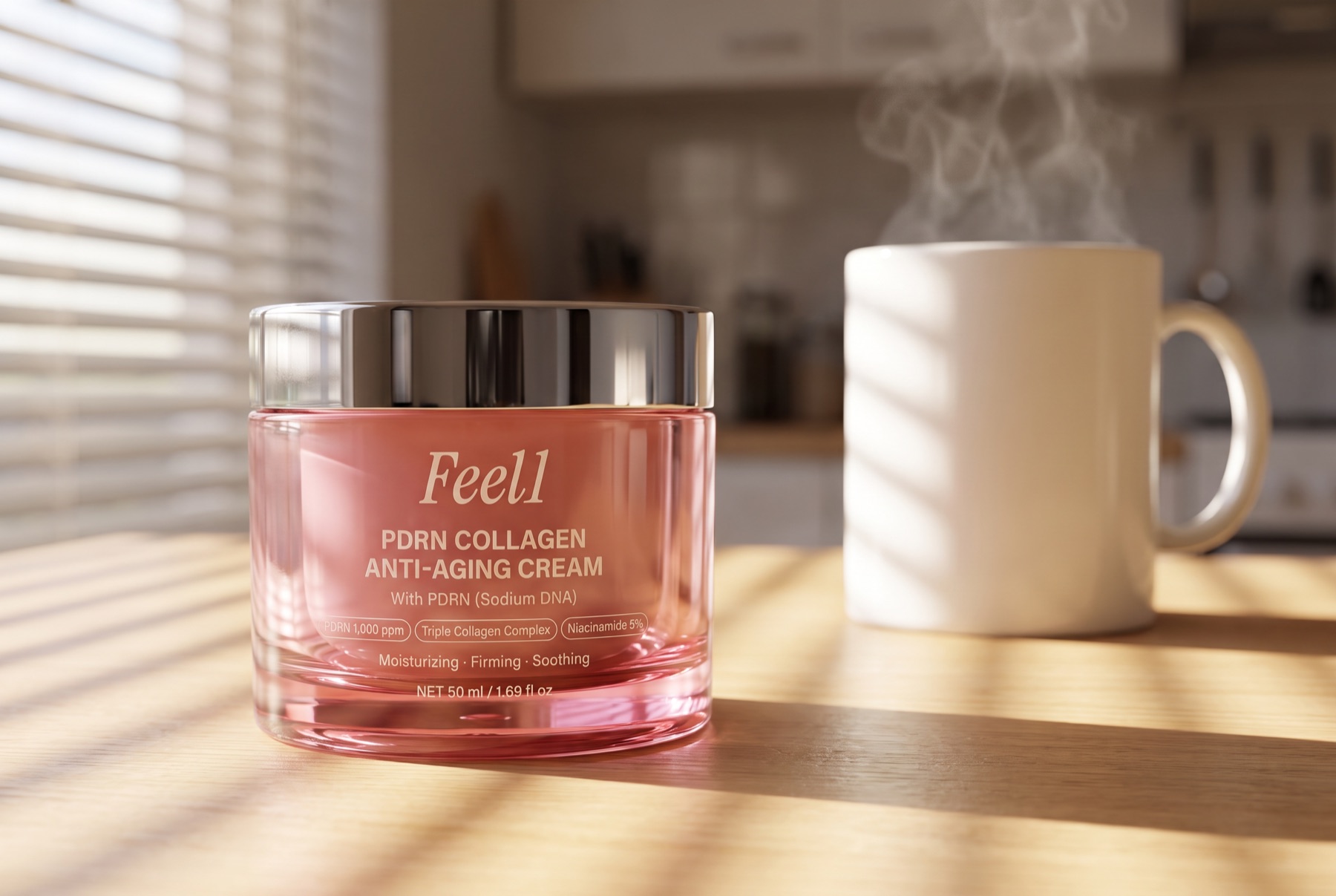
Feel1 PDRN Capsule Cream
The only cream of the three. Feel1’s PDRN collagen anti-aging cream is a pink gel-cream with small capsule beads, made in Korea.
- The plus: a declared amount. The label states PDRN (sodium DNA) at 1,000 ppm, salmon-derived. That is 0.1 percent, a number most competitors do not publish.
- Niacinamide at 5 percent. The ingredient in the jar with the strongest human data for uneven tone, at a concentration used in published trials.
- A cream, not a serum. With a triple collagen complex as a moisture-binding film, it works as the last step at night, and it has the lowest price per milliliter of the three.
The catch: 0.1 percent is a small amount, and as with every product here, the firming on the label rests on thin evidence; buy it for hydration and comfort. A jar means fingers in the product, so use clean hands, and check the list for fragrance if you avoid it.
Ingredients and the return policy are on the Feel1 PDRN Capsule Cream product page. For more background, see the brand’s own longer explainer.
Frequently asked questions
How often should I use PDRN?
What does PDRN stand for?
Is PDRN safe if I have a fish allergy?
Is there a vegan PDRN?
Sources
📚 Sources
- Squadrito et al., Pharmacological Activity and Clinical Use of PDRN, Frontiers in Pharmacology (2017), PubMed Central: https://pmc.ncbi.nlm.nih.gov/articles/PMC5405115/
- Squadrito et al., The effect of PDRN, an adenosine receptor A2A agonist, on the healing of chronic diabetic foot ulcers: results of a clinical trial, J Clin Endocrinol Metab (2014), PubMed: https://pubmed.ncbi.nlm.nih.gov/24483158/
- Bos and Meinardi, The 500 Dalton rule for the skin penetration of chemical compounds and drugs, Exp Dermatol (2000), PubMed: https://pubmed.ncbi.nlm.nih.gov/10839713/
- Lampridou et al., The Effectiveness of Polynucleotides in Esthetic Medicine: A Systematic Review, J Cosmet Dermatol (2025), PubMed Central: https://pmc.ncbi.nlm.nih.gov/articles/PMC11845969/
- Ye et al., Topical medium-length PDRN enhances dermal extracellular matrix repair in photodamaged skin, PLoS One (2026), PubMed Central: https://pmc.ncbi.nlm.nih.gov/articles/PMC13353946/
- U.S. Food and Drug Administration, Wrinkle Treatments and Other Anti-aging Products: https://www.fda.gov/cosmetics/cosmetic-products/wrinkle-treatments-and-other-anti-aging-products
- American Academy of Dermatology, How to select anti-aging skin care products: https://www.aad.org/public/everyday-care/skin-care-secrets/anti-aging/selecting-anti-aging-products