
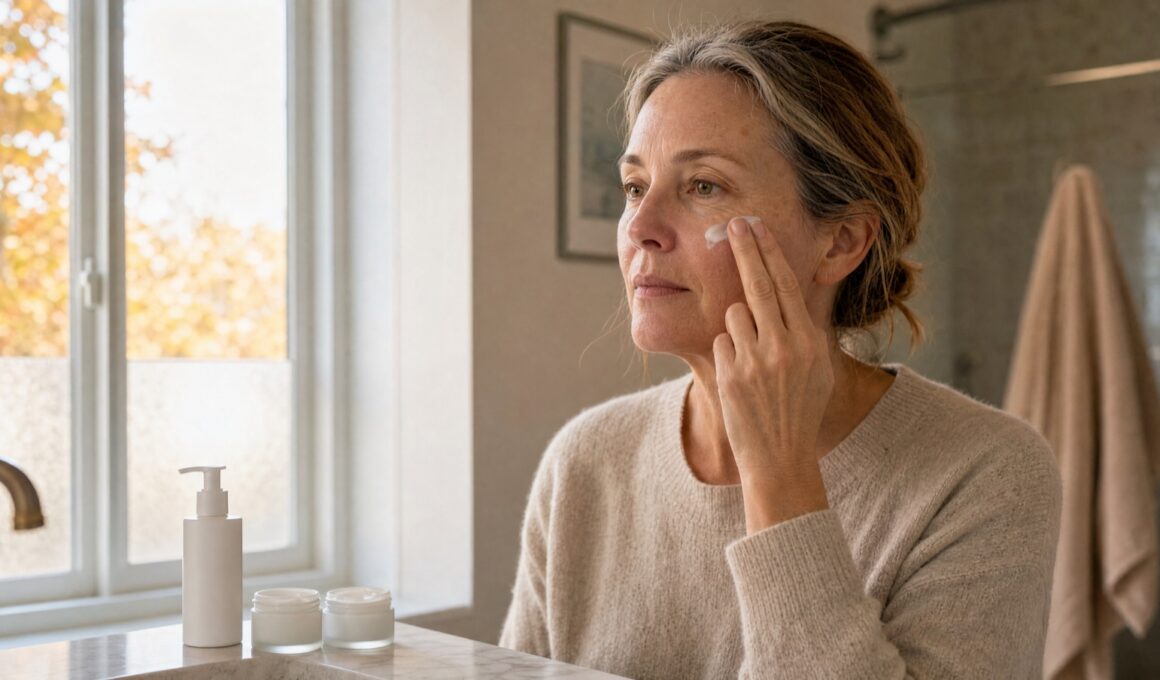
Short answer: in fall your skin barrier loses lipids to cold outdoor air and to indoor heating that drops humidity below 40 percent, while summer sun damage finally shows as dark spots. The fix is one richer cream, a gentler cleanser, sunscreen that stays, and, because UV is dropping, the best month of the year to start a retinoid.
The first sign is usually small: a little tightness after the shower. A few weeks later the skin is rough, blotchy on the cheeks, and stinging from products that were fine all year. Fall is a bigger transition for skin than most people expect, and the reason is not just temperature. This guide explains what actually happens, the five adjustments that matter, and, in the Skin Type Finder below, which of them apply to you.
🍂 The five fall adjustments
- Change the texture: from gel or lotion to a cream with lipids, the week the furnace comes on.
- Cleanse gentler: foaming gels and hot water strip exactly the fats the barrier needs now.
- Keep the sunscreen: UVA, the aging wavelength, comes through clouds and window glass all year.
- Start the actives: retinoids and acids are better tolerated in fall than in summer.
- Fix the room: a humidifier does more for dry skin than a third serum.
What actually happens to skin in the fall?
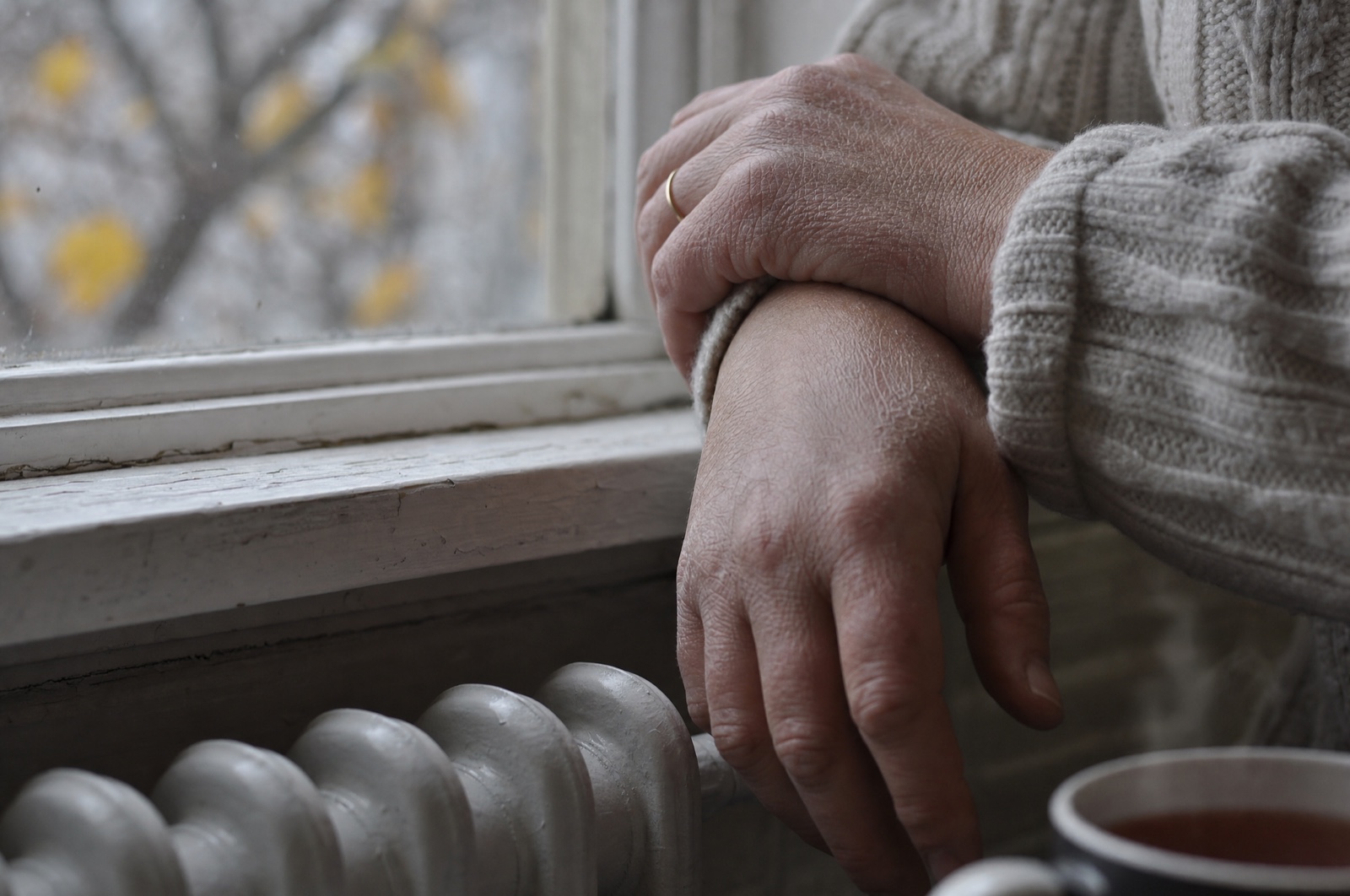
The outermost layer of skin works like a brick wall: flattened cells as bricks, and a mortar of ceramides, cholesterol and fatty acids that keeps water in and irritants out. That mortar is what fall attacks, from four directions at once.
Once the mortar thins, a loop starts. The skin loses water faster, gets rough and sensitive, stings from products, and many people respond by adding more and stronger products, which weakens the barrier further. The way out is almost always less, but richer.
How should I change my skincare routine for fall?
Why do dark spots show up now, and what helps?
Sun spots form in summer but hide behind a tan; in September the tan fades first and the spots stay. Because UV exposure is dropping, fall is when dermatologists prefer to start the ingredients that address them: vitamin C in the morning, a retinoid at night, and for stubborn spots azelaic acid or a short course of prescription hydroquinone. All of them work slowly, over eight to twelve weeks, and all of them are undone by skipping sunscreen.
Two newer ingredients come up in reader questions every fall. Copper peptides (GHK-Cu) have small studies on skin firmness and are popular in eye creams; our sister guide on getting rid of bags under the eyes covers what the evidence supports there. PDRN, a salmon-DNA extract from Korean skincare, is the current trend ingredient for post-summer repair; we compared the main US options in our PDRN skincare guide. Neither replaces the basics above; both are reasonable additions once the barrier is calm.
Which skin type are you, and what does that mean this month?
Four questions, then a specific recommendation for your fall routine.
🍂 Skin Type Finder for Fall
Four questions about your skin, then a specific list of what to change this month and what to leave alone. Nothing leaves your browser.
What should a fall skincare lineup cost?
Less than most people spend. Four products that cover the five adjustments, chosen because they are sold at every US drugstore or online and because the ingredient lists are short. Prices approximate as of September 2026.
⚠️ The five most common fall mistakes
- Hot showers. Comfortable when it is cold, and the fastest way to strip the lipids the skin needs now.
- Changing everything at once. Swap cleanser, cream and serum in the same week and you will not know what caused the reaction.
- Scrubbing rough skin. Fall roughness is almost always a thinned barrier; exfoliating makes it worse, not smoother.
- Dropping sunscreen. The wavelength that ages skin is there in November.
- Hydration without a seal. Water-only serums evaporate in dry indoor air faster than they can bind; they need a cream on top.
Frequently asked questions
Do I really need to change all my skincare products in the fall?
Does oily skin need more moisturizer in the fall?
When is the best time to start using retinol?
Does drinking more water help dry skin?
Sources
📚 Sources
- American Academy of Dermatology, Dermatologists’ tips to relieve dry skin: https://www.aad.org/public/everyday-care/skin-care-basics/dry/dermatologists-tips-relieve-dry-skin
- American Academy of Dermatology, Retinoid or retinol?: https://www.aad.org/public/everyday-care/skin-care-secrets/anti-aging/retinoid-retinol
- American Academy of Dermatology, Sunscreen FAQs: https://www.aad.org/public/everyday-care/sun-protection/sunscreen-patients/sunscreen-faqs
- Mayo Clinic, Dry skin: symptoms and causes: https://www.mayoclinic.org/diseases-conditions/dry-skin/symptoms-causes/syc-20353885
- EPA, Indoor humidity and mold: keep humidity between 30 and 50 percent: https://www.epa.gov/mold/mold-course-chapter-2
- NIH National Library of Medicine, Engebretsen et al., The effect of environmental humidity and temperature on skin barrier function and dermatitis (2016): https://pubmed.ncbi.nlm.nih.gov/26449379/