

Short answer: most melatonin sold in the US comes in 3 to 10 mg doses; the dose that mimics what your body makes is 0.3 to 1 mg. Melatonin is a timing signal, not a sedative, so when you take it matters more than how much. Start low, take it 30 to 60 minutes before bed, and buy USP Verified.
That contradicts almost every bottle on the shelf. Below: where the 3-to-10 mg habit came from, what the research supports, why the label may be wrong, and, in the Melatonin Timing Planner, at what clock time the pill should go in for your goal.
🌙 Melatonin at a glance
- What it is: a hormone released after dark that tells the body it is night. It nudges the clock; it does not sedate.
- The dose that works: 0.3 to 1 mg for adults, per the MIT research. Most US products contain 3 to 10 mg.
- The gain to expect: falling asleep about 7 to 12 minutes sooner. Useful, not dramatic.
- Buy: USP Verified only; a 2017 analysis found content from 83 percent below the label to 478 percent above it.
What melatonin actually does, and what it does not
Melatonin is not a sleeping pill in the way a prescription hypnotic is. Your pineal gland starts releasing it about two hours before your usual bedtime, as the light dims, and blood levels peak in the middle of the night at roughly 60 to 70 picograms per milliliter, a tiny amount. Its message is simply: it is dark, prepare for sleep. Researchers call it a chronobiotic, a substance that shifts the timing of the body clock. So if you take melatonin hoping to be knocked out and then lie awake scrolling, the pill did not fail; it was asked to do a job it does not have. It can nudge your sleep window earlier and help your clock adjust after a flight. It cannot override a bright room, a late coffee, or a body that is not ready for bed.
How much melatonin should you take?
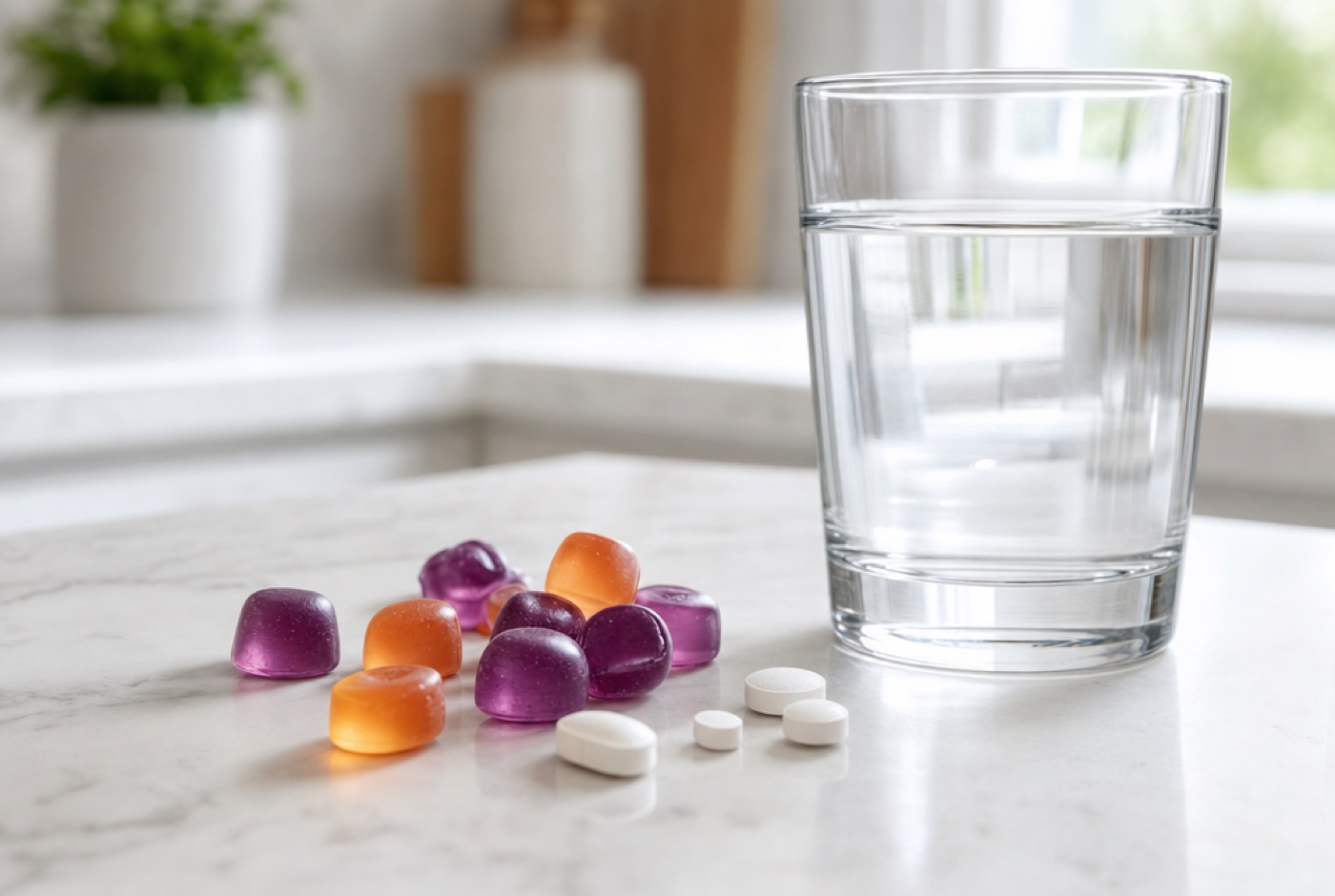
Less than you think, and less than you can easily buy. The key research comes from Richard Wurtman and Irina Zhdanova at MIT in the 1990s and early 2000s. They found that 0.3 mg raised blood melatonin to the level a healthy young adult produces at night, and that this physiological dose improved sleep in adults with insomnia, including older adults whose own production had faded. Higher doses did not work better: 3 mg was no more effective and left more people groggy the next day, because blood levels stayed elevated into the morning.
MIT patented the low-dose range, and supplement makers who did not want to license it sold 3, 5 and 10 mg instead. The patent expired years ago, but the habit stuck: the shelf looks the way it does for commercial, not medical, reasons.
And the payoff? Meta-analyses of placebo-controlled trials find that melatonin shortens time to fall asleep by about 7 to 12 minutes on average. That is real, and for someone who lies awake for an hour it is worth having. It is not what the marketing implies, and the American Academy of Sleep Medicine concluded in its 2017 guideline that the evidence was too weak to recommend melatonin for chronic insomnia at all; its clearer support goes to circadian problems such as jet lag and shift work. The practical rule: start at 0.3 to 0.5 mg, go to 1 mg only if nothing happens after two weeks, and if 5 or 10 mg leaves you with a heavy head and vivid dreams, the fix is down, not up.
When to take melatonin: timing beats dose
Because melatonin is a clock signal, the hour matters more than the milligrams. To fall asleep faster, take a low dose 30 to 60 minutes before your target bedtime; taking it as you switch off the light is too late. To shift your clock earlier, for an early shift, a new school schedule or a teenager who cannot sleep before 1 a.m., the dose goes in 2 to 5 hours before the bedtime you want, and it should be tiny, 0.3 to 0.5 mg; taken that early it advances the clock rather than sedating, and the shift builds over one to two weeks. Flying east follows the same logic; flying west, your clock delays easily on its own and melatonin is optional. And never in the middle of the night: a dose at 3 a.m. does nothing for your clock and leaves you groggy at 7.
Pick your goal and the time you want to be asleep; the planner does the clock math.
🌙 Melatonin Timing Planner
Pick what you are trying to fix and the time you want to be asleep. You get a clock time, a low dose range, how many nights to try it, and one honest note. Nothing you enter leaves your browser.
Pick a goal above to see your plan.
Why the bottle may not contain what it says
In the United States melatonin is a dietary supplement: the FDA does not approve it before sale and does not test what is in it. In most of Europe, Australia and the UK it is a prescription medicine. The study everyone in sleep medicine cites appeared in the Journal of Clinical Sleep Medicine in 2017: researchers tested 31 supplements and found actual content from 83 percent below to 478 percent above the label, with more than 70 percent of products off by over ten percent. Most troubling, about a quarter contained serotonin, a controlled substance that appeared nowhere on the label. A 2023 analysis of gummies found the same pattern, including one product with no melatonin at all.
The fix is the USP Verified mark, a yellow-and-black seal showing that an independent lab confirmed the product contains what the label says, in the stated amount, without contaminants. NSF certification is the other mark worth trusting. Anything else is a guess, and with melatonin a guess can mean ten times the dose you intended.
Melatonin gummies and children
The gummy is where the dose problem becomes a safety problem. Gummies taste like candy, sit in kitchen cabinets, and are increasingly handed to children nightly. A CDC report in Morbidity and Mortality Weekly Report counted more than 260,000 poison control calls about children ingesting melatonin between 2012 and 2021, a 530 percent increase. Most were fine, but more than 4,000 were hospitalized, nearly 300 needed intensive care, and two died. The American Academy of Pediatrics does not consider melatonin a first-line sleep aid for children, and the AAP and AASM ask parents to talk to a pediatrician first; studied doses are small, typically 0.5 to 1 mg. The AASM adds two blunt rules: buy only USP Verified products, and store the bottle like any medication, out of reach and never on a nightstand.
Who should not take melatonin, or should ask first
- Pregnant or breastfeeding women. Too little safety data; the NIH advises against use without a doctor’s guidance.
- People with autoimmune conditions such as rheumatoid arthritis or lupus; melatonin can stimulate immune activity.
- Anyone on a blood thinner, including warfarin. Melatonin may increase bleeding risk.
- People on seizure medication. Melatonin interacts with several anticonvulsants.
- Anyone on blood pressure, diabetes or immunosuppressant drugs, or sedatives. Effects can add up or interfere.
- Older adults with dementia. The AASM recommends against it.
- Children, without a pediatrician’s go-ahead. And for everyone: no driving for four to five hours after a dose.
Which melatonin to buy
Low dose, third-party tested. Prices are approximate US retail as of late summer 2026.
What works better than melatonin for long-term sleep

Here is the part no label mentions. For chronic insomnia, the treatment with the strongest evidence is not a pill but cognitive behavioral therapy for insomnia, CBT-I, a structured four-to-eight-week program that retrains the habits and thoughts keeping you awake. The AASM and the American College of Physicians both recommend it ahead of any medication, and its effects last after the program ends. Two habits do most of what melatonin does. Light: bright light within an hour of waking anchors your clock, and dim, warm light after dinner lets your own melatonin rise on schedule, which is why the reader in the photograph has her phone face-down. And a consistent wake time, seven days a week; bedtime can float, but the wake time sets the clock. Do that, and the 0.3 mg capsule becomes something for trips and rough weeks.
⚠️ Four melatonin mistakes
- Taking 5 or 10 mg because that is what the store sells. The studied dose is 0.3 to 1 mg.
- Taking it as you switch off the light, or at 3 a.m. It needs 30 to 60 minutes; for clock shifting, hours.
- Buying by price or flavor. Without a USP or NSF mark, the label is a guess.
- Leaving gummies where a child can reach them. Pediatric ingestions rose fivefold in ten years.
Frequently asked questions
Is it safe to take melatonin every night?
Can you overdose on melatonin?
Why does melatonin give me vivid dreams or a headache?
Does melatonin work for jet lag?
Sources
📚 Sources
- NIH National Center for Complementary and Integrative Health, Melatonin: What You Need To Know: https://www.nccih.nih.gov/health/melatonin-what-you-need-to-know
- Mayo Clinic, Melatonin: https://www.mayoclinic.org/drugs-supplements-melatonin/art-20363071
- Sateia et al., AASM Clinical Practice Guideline for the Pharmacologic Treatment of Chronic Insomnia, Journal of Clinical Sleep Medicine 2017: https://jcsm.aasm.org/doi/10.5664/jcsm.6470
- Erland & Saxena, Melatonin Natural Health Products and Supplements: Presence of Serotonin and Significant Variability of Melatonin Content, Journal of Clinical Sleep Medicine 2017: https://jcsm.aasm.org/doi/10.5664/jcsm.6462
- CDC MMWR, Pediatric Melatonin Ingestions, United States, 2012–2021: https://www.cdc.gov/mmwr/volumes/71/wr/mm7122a1.htm
- American Academy of Pediatrics, HealthyChildren.org, Melatonin and Children’s Sleep: https://www.healthychildren.org/English/healthy-living/sleep/Pages/melatonin-and-childrens-sleep.aspx